• Add description, images, menus and links to your mega menu

  • A column with no settings can be used as a spacer

  • Link to your collections, sales and even external links

  • Add up to five columns

  • da

  • A column with no settings can be used as a spacer

  • Link to your collections, sales and even external links

  • Add up to five columns

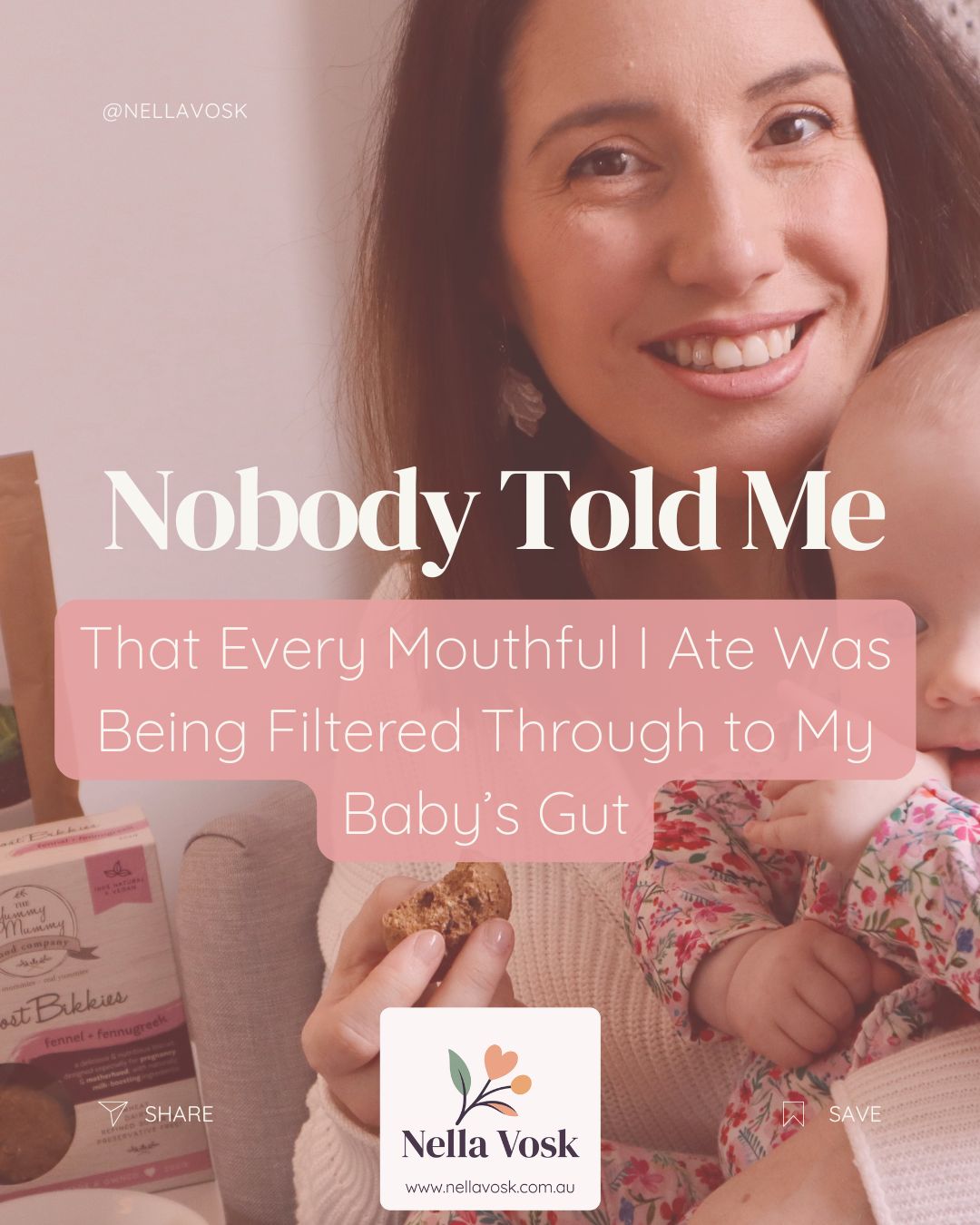
  • Nobody Told Me That Every Mouthful I Ate Was Being Filtered Through to My Baby’s Gut

    Founder of Nella Vosk • 14+ years supporting families across motherhood, feeding, and early childhood wellbeing

    Nobody Told Me That Every Mouthful I Ate Was Being Filtered Through to My Baby’s Gut


    This article is part of the Nella Vosk Breastfeeding Nutrition & Milk Supply: Evidence-Based Guide for Australian Mothers — your comprehensive resource on nourishing yourself and your baby through every stage of the feeding journey.

    This article is part of Nella Vosk’s Nobody Told Me series — a growing collection of posts about the information gap that too many mothers encounter after birth. Every article in this series starts from a moment a mother wasn’t told something she needed to know, and works back through the clinical truth behind it. You can find the full series at nellavosk.com.au/pages/nobody-told-me.


    Nobody told me that every mouthful I ate was being filtered through to my baby’s gut.

    Not in that general, vague way that people mention it — “oh, you’re eating for two” or “avoid the soft cheeses.” I mean the specific, documented, biologically fascinating reality that what a breastfeeding mother eats directly shapes the microbial environment of her baby’s gut — and through that, her baby’s immune system, digestive health, and potentially their long-term risk of allergic and inflammatory conditions.

    This is not fringe science. It is an active and well-funded area of research, and the picture it is building is one of the most compelling arguments for taking maternal nutrition seriously — not just for the mother, but for the child she is feeding.

    This post explains what the research actually shows about the connection between maternal diet and infant gut health, what the three key pathways are, what the evidence is genuinely good on versus where it is still emerging, and what it means practically for a breastfeeding mother who wants to support her baby’s gut without unnecessary anxiety or restriction.

    Does What You Eat Go Into Breastmilk?

    Yes — but the answer is more nuanced than a simple yes. Some things pass directly into breast milk in meaningful quantities. Others influence breast milk composition indirectly. And the relationship between what a mother eats, what appears in her milk, and what actually reaches and affects her baby’s gut involves several distinct pathways that are worth understanding separately.

    Breast milk is not a passive filtration of the maternal diet. It is an actively synthesised biological fluid, and the body prioritises its composition even when the mother’s own nutritional reserves are under pressure. But maternal diet does influence breast milk — in composition, in the microbial content it carries, in the specific complex carbohydrates it contains, and in the metabolites that appear in it as a result of what the mother has eaten.

    The Three Pathways Between Maternal Diet and Baby’s Gut

    Pathway 1: Human milk oligosaccharides (HMOs) and fibre-fed gut flora

    Human milk oligosaccharides are complex carbohydrates in breast milk that are specifically not digestible by the baby. They pass through the baby’s upper digestive system intact and arrive in the large intestine, where they selectively feed beneficial bacterial species — particularly Bifidobacterium — that are critical for early gut microbiome development, immune maturation, and inflammatory regulation.

    HMO composition varies between mothers and is influenced partly by genetics and partly by maternal diet. A diet rich in dietary fibre — from vegetables, legumes, wholegrains, and fruit — supports the maternal gut microbiome that, in turn, influences the HMO profile of the milk produced. A diet low in diverse plant fibre tends to produce a less diverse maternal microbiome and may produce a less diverse HMO profile in the milk.

    This is one of the clearest dietary levers a breastfeeding mother has for supporting her baby’s gut: eating a varied, plant-rich diet is not just good for her own digestive health. It directly supports the prebiotic landscape of her breast milk.

    Pathway 2: The breast milk microbiota

    Breast milk is not sterile. It contains its own community of bacteria — the breast milk microbiota — that is transferred directly to the baby with every feed. Research has found that up to 88% of bacterial genera are shared between human milk and the breastfed infant’s stool, supporting direct transmission as a significant driver of early infant gut colonisation.

    The composition of the breast milk microbiota is influenced by the maternal gut microbiome, which is itself shaped by maternal diet. A systematic review published in Nutrients (2021) found that maternal probiotic supplementation during pregnancy and lactation generally resulted in probiotic colonisation of the infant gut microbiota, supporting the pathway from maternal gut to milk to infant gut as a real and clinically meaningful mechanism.

    This is why the question “can you take probiotics while breastfeeding?” has a clinically interesting answer: yes, and the evidence suggests that maternal probiotic intake can influence the bacterial profile of breast milk and, through it, the bacterial colonisation of the infant gut. This is an emerging rather than definitive finding, but the direction of evidence is consistent.

    Pathway 3: Dietary metabolites in breast milk

    Specific dietary compounds — fatty acids, polyphenols, flavonoids, and certain proteins — pass into breast milk and reach the baby in bioactive form. The most clinically significant of these is DHA (docosahexaenoic acid), the long-chain omega-3 fatty acid from oily fish, walnuts, and chia seeds, which appears in breast milk in concentrations that directly reflect the mother’s dietary intake and supplementation.

    DHA in breast milk is associated with infant neurological development, visual acuity, and immune function. Australian mothers are among the most DHA-depleted postpartum in the developed world, and this depletion is reflected in lower DHA concentrations in Australian breast milk compared to populations with higher oily fish consumption.

    Beyond DHA, polyphenols from fruit, vegetables, and tea appear in breast milk and may exert prebiotic and anti-inflammatory effects in the infant gut. This is an area of active research with significant interest but limited clinical trials to date. The consistent finding across the literature is that dietary diversity in the breastfeeding mother produces a more compositionally diverse breast milk — and a more diverse infant gut microbiome at follow-up.

    What the Evidence Is Good On — and Where It’s Still Emerging

    It is important to be honest about where the science currently sits, because the popular narrative often runs ahead of the evidence in both directions: either overstating the mother’s dietary responsibility for everything the baby experiences, or dismissing the connection as negligible.

    The evidence is well-established on:

    • Breastfeeding itself is the single most important early-life factor for infant gut microbiome development — more influential than any specific maternal dietary choice within a breastfed context

    • Dietary fibre intake in the mother supports HMO diversity in breast milk

    • DHA concentration in breast milk directly reflects maternal dietary DHA intake

    • Maternal probiotic supplementation during lactation can colonise the breast milk microbiota and, through it, the infant gut

    • Mode of birth (vaginal vs caesarean) has a significant independent effect on infant gut microbiome composition that interacts with breastfeeding

    The evidence is emerging but promising on:

    • The specific relationship between individual maternal food choices during lactation and infant gut bacterial diversity

    • The long-term immune and health outcomes attributable to breast milk microbiota composition

    • The clinical significance of polyphenol and flavonoid transfer through breast milk to the infant gut

    The honest summary is that eating a varied, fibre-rich, nutrient-dense diet while breastfeeding supports both the mother’s gut health and the composition of her breast milk in documented ways — and that this matters for the infant gut at the other end. The precise magnitude of that effect for any individual mother-infant pair is still being characterised.


    The Breastfeeding Elimination Diet Question

    One of the most common questions — and one of the most anxious places a breastfeeding mother can find herself — is whether she needs to follow a breastfeeding elimination diet for a baby who seems gassy, unsettled, or is showing signs of eczema or digestive discomfort.

    This question deserves a careful answer, because the evidence does not support broad dietary elimination as a first response to infant unsettledness. Gas and fussiness in young babies are almost always developmental, not dietary in origin. Babies have immature digestive systems. They swallow air. They have not yet developed the gut muscle coordination for comfortable digestion. Most gassy, unsettled babies are not reacting to anything their mother has eaten.

    The clinical picture is different for a baby with confirmed or suspected cow’s milk protein allergy (CMPA) or a baby with eczema where food triggers have been identified by a healthcare provider. In these cases, a targeted elimination diet under the guidance of a GP, paediatric allergist, or dietitian is a reasonable and evidence-supported approach.

    What is not supported by evidence is the reflexive elimination of dairy, gluten, soy, and a growing list of foods in response to a baby who seems uncomfortable in ways that are developmentally normal. This approach carries a real risk: a breastfeeding mother who significantly restricts her diet is a mother at increased risk of nutritional depletion, which has consequences for her own health, her mental wellbeing, and her milk supply.

    If you are considering a breastfeeding elimination diet, the starting point should be a conversation with your GP or a dietitian with paediatric and lactation experience — not the removal of entire food groups based on online forums. For the specific question of dairy elimination for a baby with eczema, the Nella Vosk guide to dairy-free breastfeeding for baby eczema covers the evidence-based approach in full.

    Can You Take Probiotics While Breastfeeding?

    Yes, with the evidence currently supporting this as safe and potentially beneficial. Probiotic supplementation during breastfeeding is one of the areas where the maternal diet — infant gut pathway has the most direct and well-characterised mechanism.

    A systematic review of 29 randomised controlled trials found that maternal probiotic supplementation during pregnancy and lactation generally resulted in probiotic colonisation of breast milk, and through it, altered infant gut bacterial loads. The most consistently studied strains in this context are Lactobacillus and Bifidobacterium species.

    For mothers who have recently taken antibiotics — which significantly disrupt the maternal gut microbiome and may affect breast milk microbial composition — probiotic supplementation during and after the antibiotic course is a reasonable and commonly recommended approach. Discuss the appropriate strain and timing with your GP or pharmacist.

    For mothers who want to actively support their own gut health during breastfeeding — which in turn supports the microbial quality of their milk — probiotic-rich fermented foods (unsweetened yoghurt, kefir, kimchi, sauerkraut, miso, tempeh) are a food-first approach with no downside and consistent evidence of benefit for maternal gut microbiome diversity.

    What This Means Practically

    The research on maternal diet and infant gut health does not translate into a list of foods to eat and foods to avoid. It translates into a few clear principles:

    Eat diverse plant foods

    Dietary fibre diversity — from a wide range of vegetables, fruit, legumes, and wholegrains — is the single highest-leverage dietary choice for supporting both the maternal gut microbiome and, through it, the HMO and microbial composition of breast milk. Aim for variety rather than perfection: different plant foods feed different bacterial species, and diversity in the diet produces diversity in the gut.

    Prioritise DHA

    Eat oily fish two to three times per week (salmon, sardines, mackerel — lower mercury options are appropriate while breastfeeding), or consider a DHA supplement if your diet is low in marine sources. DHA is the dietary nutrient with the most direct, well-characterised transfer pathway from maternal diet to breast milk to infant neurological and immune development.

    Include fermented foods

    Yoghurt, kefir, kimchi, sauerkraut, and other fermented foods support the maternal gut microbiome. Where maternal probiotic intake influences breast milk microbial composition, fermented foods are a food-first way to support that pathway without the cost or complexity of supplementation.

    Do not eliminate without clinical guidance

    Broad dietary restriction while breastfeeding risks nutritional depletion without clinical justification. If your baby shows signs that genuinely concern you — blood in stool, severe eczema, persistent inconsolable crying, significant weight concerns — these warrant a GP or paediatric review, not self-directed elimination.

    Eat enough

    A mother who is undereating has a depleted nutritional substrate from which to synthesise breast milk. Caloric adequacy is not just about supply — it is about the nutritional richness of the milk produced. Eat enough, eat consistently, and eat the nutrients that breastfeeding draws on most heavily: iron, DHA, zinc, iodine, magnesium, B vitamins.

    Keep Reading

    These posts go deeper into breastfeeding nutrition and infant health:

    Foods to Increase Milk Supply Naturally: What the Evidence Says

    What Not to Eat When Breastfeeding: The Evidence-Based Australian Guide

    Dairy-Free Breastfeeding for Baby Eczema: Australian Guide

    Does Breastfeeding Prevent Eczema? What Research Shows

    Postpartum Nutrition & Recovery: Complete Guide for New Mothers

    Best Postpartum Snacks for Energy and Milk Supply

    Breastfeeding Nutrition & Milk Supply: Evidence-Based Guide


    What you eat while breastfeeding matters — for you, and for the tiny gut you are quietly shaping. The Nella Vosk postpartum recovery range is formulated by a Certified Postpartum Nutrition Professional to support the nutritional foundation that your breast milk — and your baby’s developing gut — depends on.


    ABOUT THE AUTHOR

    Kelly Northey is a Certified Postpartum Nutrition Professional (CPPNP) and founder of Nella Vosk, an Australian maternal and family wellness brand. She specialises in breastfeeding nutrition, maternal recovery, and the connection between what mothers eat and how their babies thrive.
    Learn more about Kelly.


    Also in Nobody Told Me: Breastfeeding & Milk Supply

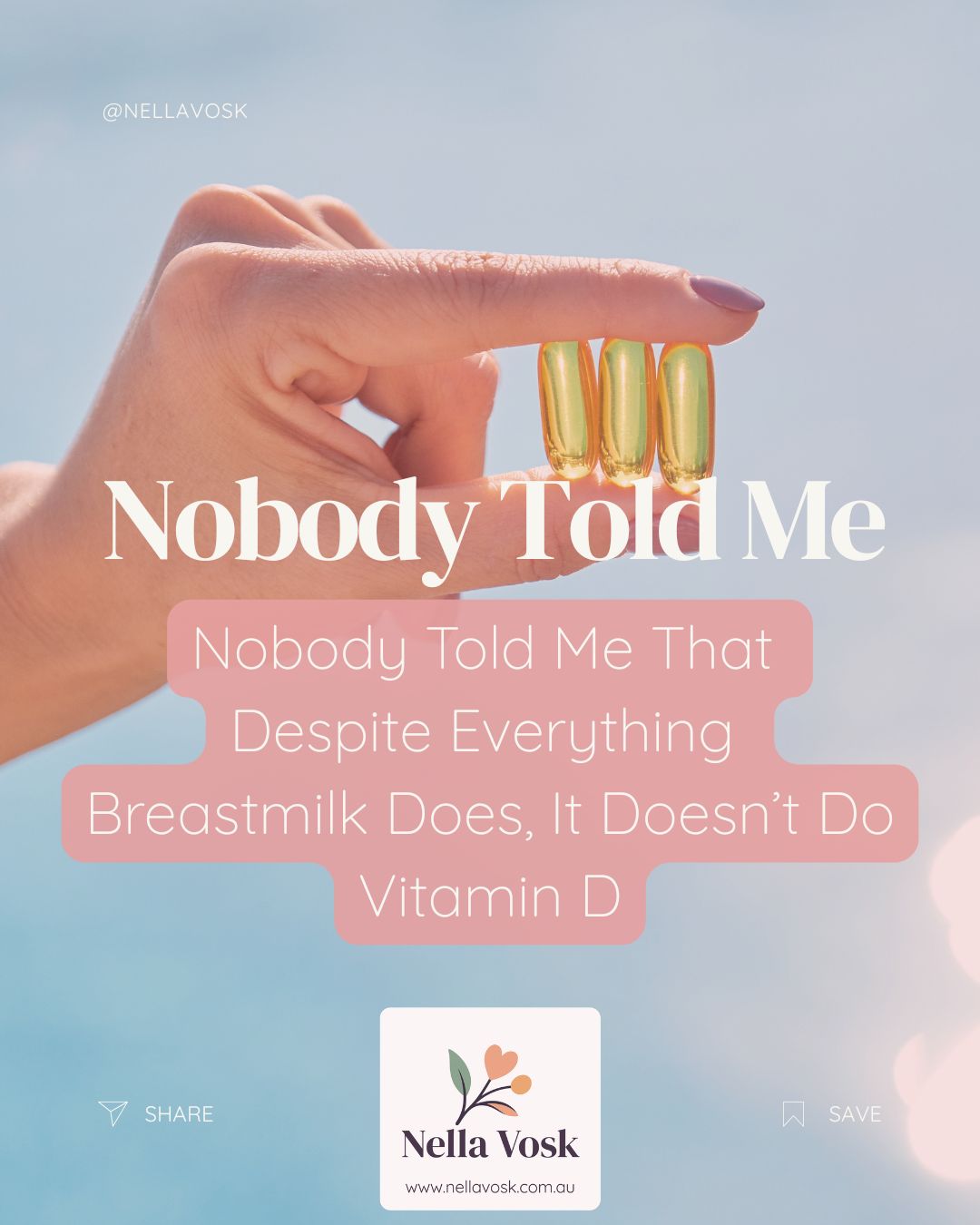
    Nobody Told Me That Despite Everything Breastmilk Does, It Doesn’t Do Vitamin D
    Nobody Told Me That Despite Everything Breastmilk Does, It Doesn’t Do Vitamin D

    Read More
    Nobody Told Me That How My Birth Went Could Show Up in My Milk
    Nobody Told Me That How My Birth Went Could Show Up in My Milk

    Read More
    Nobody Told Me That My Body Would Notice the Shift Back to Work Before I Even Got There
    Nobody Told Me That My Body Would Notice the Shift Back to Work Before I Even Got There

    Read More