DEAL WEEK | TODAY: ANY TWO PAIRS OF MITTEN SLEEVES FOR $66.20 | SEE THE DEAL →

0

Your Cart is Empty

Nobody Told Me That Removing Dairy Might Not Do What I Hoped

Text graphic about food allergy and eczema in neutral tones

This article is part of the Nella Vosk Complete Guide to Baby Eczema for Australian Families — everything parents managing atopic dermatitis need to know about triggers, management, and the skin barrier.

This article is part of Nella Vosk's Nobody Told Me series — a growing collection of posts written for the parent who has been trying everything and still feels like they're failing their child. Every post in this series starts from a moment a parent wasn't given information they needed, and works back through what the evidence actually says. You can find the full series at nellavosk.com.au/pages/nobody-told-me.


Nobody told me that removing dairy might not do what I hoped — and that the connection between food and eczema was more complicated than I'd been told.

By the time my son was four months old I had cut out dairy. By five months I'd cut out eggs too. By six months the eczema was no better and I was surviving on rice crackers and self-blame. I was certain I was the problem. If I could just find the food — the one food — I could fix it.

What nobody told me was this: for most babies with eczema, food isn't the primary driver. The connection is real, but it's real for a minority. And understanding that distinction — clearly, early, before you've stripped your diet to nothing — would have changed everything.

The Connection Is Real — But It's Not What Most Parents Think

Eczema and food allergy are genuinely linked. Babies with moderate to severe eczema have a higher risk of food allergies than babies without eczema — the mechanism involves the compromised skin barrier, which allows food proteins to enter through broken skin and trigger an immune response before the gut has a chance to establish tolerance.

But the numbers matter here. Around 30% of babies with moderate to severe eczema have a food allergy contributing to their symptoms. That means approximately 70% do not. For the majority of families managing eczema, food elimination will make no difference to the skin — because the eczema isn't food-driven.

The problem is that eczema naturally fluctuates. It gets better. It gets worse. It responds to temperature, teething, stress, illness, laundry residue, fabric, and a hundred other variables. When a parent removes dairy and the eczema improves the following week, it is genuinely difficult to know whether the dairy was the cause or whether the skin simply had one of its better weeks. Without a proper elimination-reintroduction protocol, it's almost impossible to tell.

Why Elimination Without Testing Often Doesn't Help — And Can Harm

The reflex to eliminate food is understandable. It feels like action. It feels like something a good parent does when their child is suffering. But elimination without confirmed allergy testing carries real costs.

Nutritionally, removing major food groups — dairy, eggs, soy, wheat — from a breastfeeding mother's diet affects her own health and can affect milk supply and composition. For a baby starting solids, unnecessary elimination increases the risk of developing the very allergies parents are trying to avoid: the research is clear that early allergen introduction reduces allergy development risk, while delayed introduction increases it.

Practically, broad elimination makes it impossible to identify which food — if any — is actually involved. If you remove eight foods simultaneously and the skin improves, you have no idea what caused the improvement. Reintroduction becomes guesswork, often leading to permanent exclusion of foods that were never the problem.


What to Do Instead

If you genuinely suspect food is involved in your baby's eczema, the right path is a structured elimination-reintroduction trial — one food at a time, for long enough to get a clear result, ideally with guidance from your GP or an accredited practising dietitian.

The most common food trigger in eczema babies is cow's milk protein — if you're going to start anywhere, start there. Our guide to dairy-free breastfeeding for eczema babies covers exactly how to run a proper elimination trial, what to watch for, how long to go, and what a result that actually means looks like.

If you're not sure whether eczema flares around feeding are food-related or something else entirely — contact irritation, heat from the effort of feeding, positional pressure — our article on why eczema gets worse after feeding unpacks the different mechanisms and helps you work out what you're actually looking at.

If your baby is approaching solids and you're anxious about allergen introduction with eczema in the picture, the ASCIA 2026 allergen introduction guide is the place to go. The evidence on early introduction is now very strong — and eczema is not a reason to delay.

The thing I wish someone had told me, early and clearly: the skin barrier is the primary problem in eczema. Food can be a trigger for some babies. But for most, consistent emollient use, scratch protection, and environmental trigger management will do more for the skin than any elimination diet.

You're not missing a food. You're not failing to find the answer. The answer, for most families, is already in the routine — not the fridge.

If You Want to Go Deeper

Baby Eczema Worse After Feeding? Causes & Solutions

Dairy-Free Breastfeeding for Baby Eczema: Australian Guide

Allergen Introduction for Eczema Baby: ASCIA Guidelines 2026

Elimination Diet While Breastfeeding: Step-by-Step Guide

First Foods for Eczema Baby: Safe Introduction Guide


ABOUT THE AUTHOR
Kelly Northey is a Certified Postpartum Nutrition Professional (CPPNP) and founder of Nella Vosk, the parent company of the Bamboo Bubby range. She has spent fourteen years working with Australian families navigating baby and child eczema — the sleepless nights, the skin that won't heal, and the guilt of feeling like you should be doing more. The Bamboo Bubby range exists because of those families.
Learn more about Kelly.

Every Nourish Mama product is free from gluten, dairy, nuts, soy and yeast. See our allergy-friendly range if your family is managing food allergies or intolerances.


Also in Nobody Told Me: Your Baby's Skin

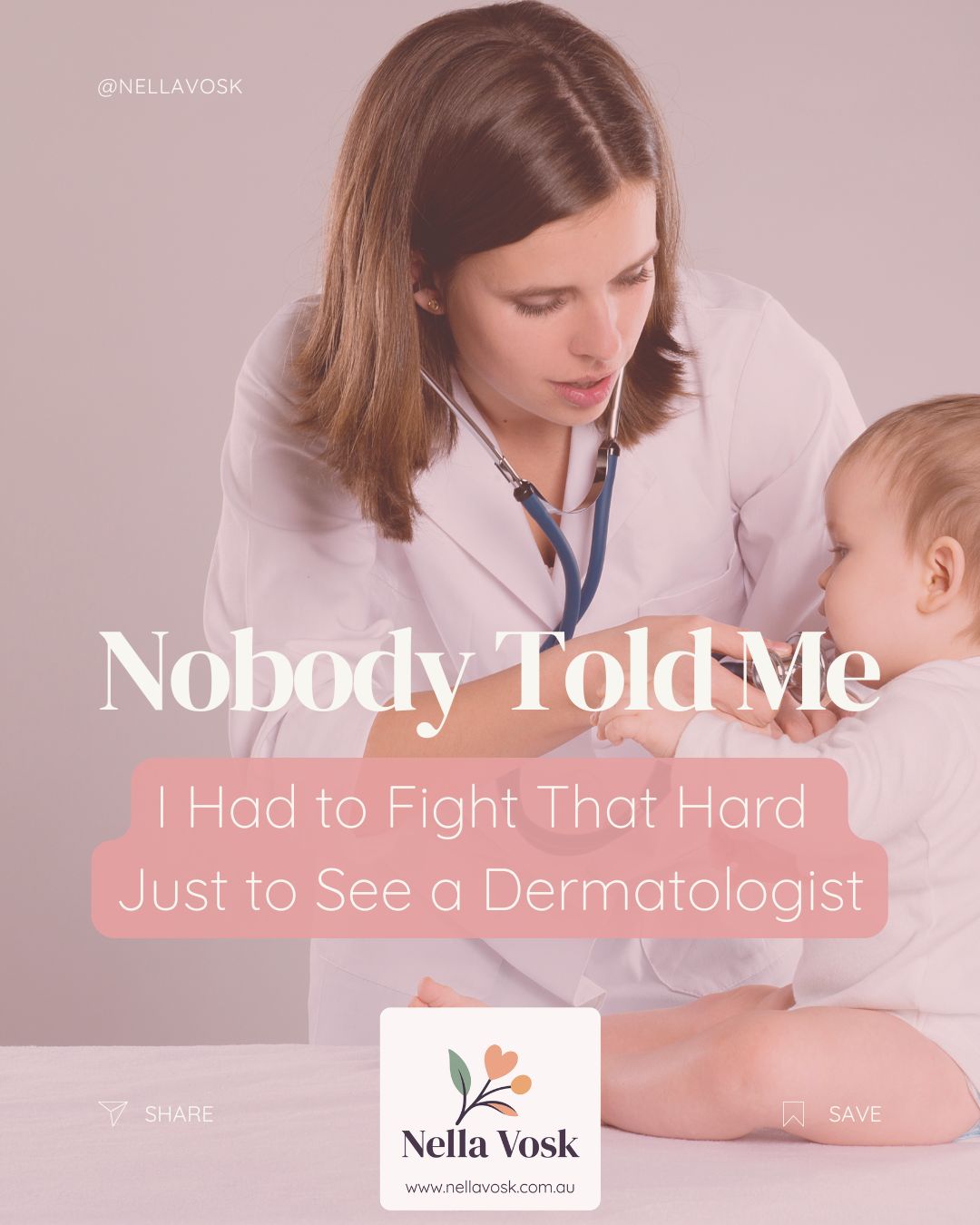
Mother and baby waiting in a doctor's consultation room
Nobody Told Me I Had to Fight That Hard Just to See a Dermatologist

Read More
Parent holding a bottle of medicine beside a baby with eczema
Nobody Told Me That the Antibiotics for the Infected Eczema Might Make the Next Infection More Likely

Read More
Adult woman applying moisturiser to dry eczema-prone skin on her hands
Nobody Told Me That Adult Eczema Needs Different Management — or That My Baby’s Approach Wouldn’t Work for Mine

Read More