• Add description, images, menus and links to your mega menu

  • A column with no settings can be used as a spacer

  • Link to your collections, sales and even external links

  • Add up to five columns

  • da

  • A column with no settings can be used as a spacer

  • Link to your collections, sales and even external links

  • Add up to five columns

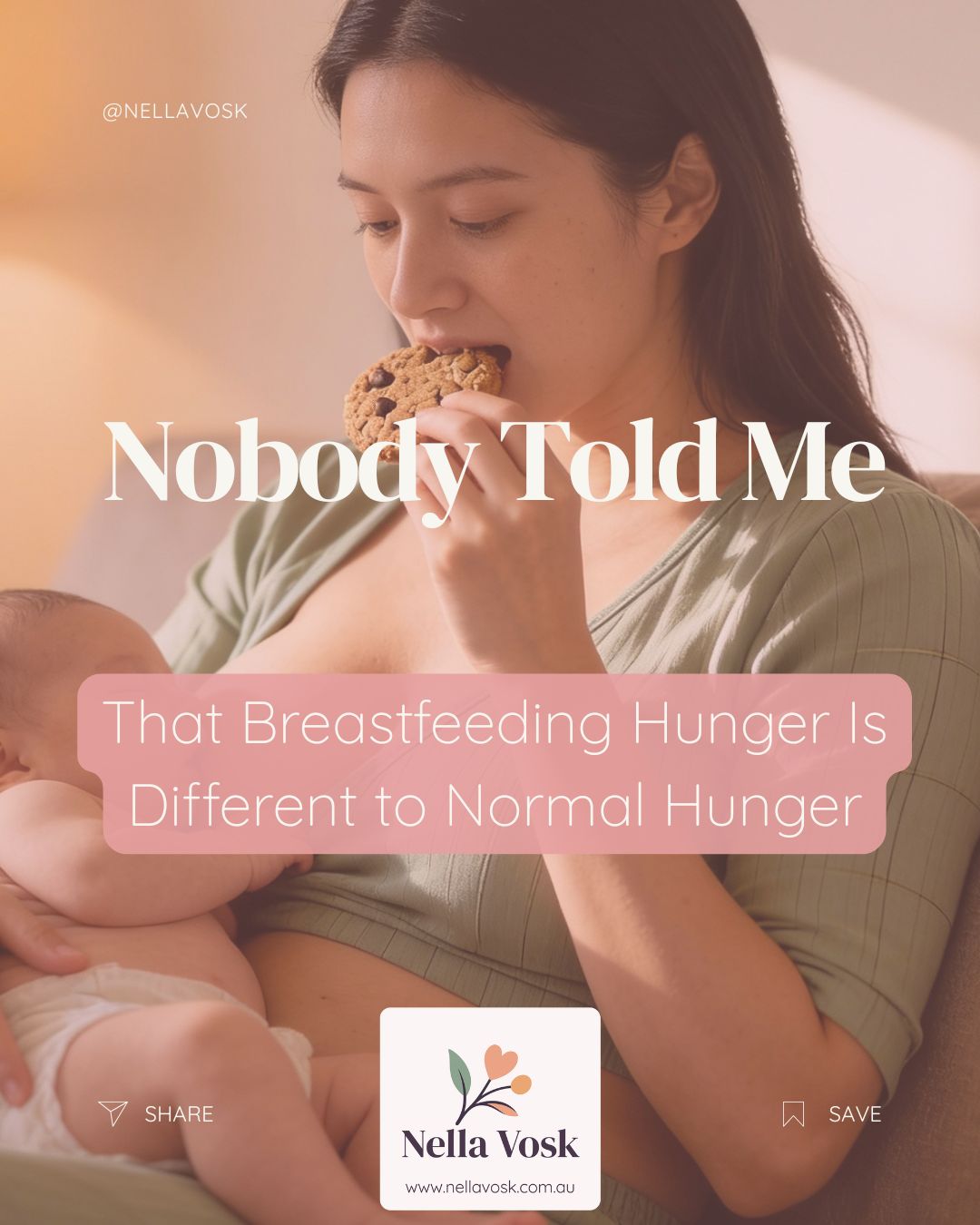
  • Nobody Told Me That Breastfeeding Hunger Is Different to Normal Hunger

    Founder of Nella Vosk • 14+ years supporting families across motherhood, feeding, and early childhood wellbeing

    Nobody Told Me That Breastfeeding Hunger Is Different to Normal Hunger


    This article is part of the Nella Vosk Breastfeeding Nutrition & Milk Supply: Evidence-Based Guide for Australian Mothers — your comprehensive resource on nourishing yourself through every stage of the feeding journey.

    This article is part of Nella Vosk’s Nobody Told Me series — a growing collection of posts about the information gap that too many mothers encounter after birth. Every article in this series starts from a moment a mother wasn’t told something she needed to know, and works back through the clinical truth behind it. You can find the full series at nellavosk.com.au/pages/nobody-told-me.


    Nobody told me I’d be ravenous at 3am — and that it was biology, not weakness.

    I remember the first few weeks after my daughter was born. I’d finish a full meal and be hungry again within the hour. I’d wake in the night not just because she was feeding, but because I was genuinely, urgently hungry myself. And I felt embarrassed by it. Like I was being greedy. Like my appetite was a character flaw that had inconveniently surfaced at the worst possible time.

    Nobody explained that breastfeeding hunger is a different physiological state to normal hunger. That the hormones involved in milk production actively interfere with the brain signals that tell you when you’re full. That your body is quietly burning through nutrients at a rate that has no equivalent in non-lactating life. That the 3am hunger is not weakness or emotional eating — it is your body doing exactly what it should, and communicating a genuine, urgent need.

    If you are breastfeeding and always hungry, this post is for you. Not to manage your hunger. To validate it, explain it, and help you actually feed yourself well enough to sustain what you’re doing.

    Why Breastfeeding Hunger Feels Different to Normal Hunger

    Normal hunger is a gradual rise. You finish breakfast, hunger slowly builds across the morning, you eat lunch, you’re satisfied for a few hours. The system works because the hormones that regulate appetite — particularly leptin, which signals fullness to the brain — are functioning in a relatively stable hormonal environment.

    Breastfeeding disrupts that environment significantly.

    Prolactin blocks your fullness signals

    Prolactin is the hormone responsible for milk production. It rises substantially when you breastfeed or express, and it stays elevated throughout the lactation period. What most mothers are never told is that high prolactin levels induce leptin resistance — meaning the hormone that should signal to your brain that you’ve eaten enough becomes less effective.

    In practice, this means you can eat a meal that would ordinarily keep you full for three or four hours, and feel hungry again within one. It is not your imagination. It is not a lack of willpower. It is a direct hormonal consequence of the process that is keeping your baby fed.

    Your body is producing milk around the clock

    Milk production is energetically expensive. Producing breast milk is estimated to use approximately 450 to 500 extra calories per day — a sustained caloric demand that has no equivalent outside of pregnancy and lactation. The NHMRC guidelines for Australian breastfeeding mothers indicate an additional 330 to 400 calories per day above pre-pregnancy baseline as a minimum, though many clinicians working with breastfeeding families find the real-world demand sits higher, particularly in the early weeks of exclusive breastfeeding when output is highest.

    To put that in perspective: running approximately 5 kilometres burns roughly 300 to 400 calories for most women. Breastfeeding demands the equivalent of that, every single day, on top of everything else your recovering postpartum body is managing.

    Sleep deprivation amplifies hunger signals

    The two hormones that regulate hunger — leptin (fullness) and ghrelin (hunger) — are significantly disrupted by sleep deprivation. Ghrelin rises when you’re sleep-deprived, increasing the signal to eat. Leptin falls, reducing the signal to stop. This means that the fragmented sleep of new motherhood doesn’t just make you tired — it actively intensifies your experience of hunger, and makes it harder for your brain to recognise when you’ve had enough.

    A breastfeeding mother in the early weeks is experiencing three separate hunger-amplifying mechanisms simultaneously: the caloric cost of milk production, prolactin-induced leptin resistance, and sleep-deprivation-driven hormonal dysregulation. The result is a hunger that feels urgent, constant, and unlike anything most women have experienced before.

    The 3am Hunger Is Not What You Think It Is

    One of the most common things I hear from breastfeeding mothers is embarrassment about night hunger. About raiding the fridge at 3am. About eating crackers in the dark while their baby feeds because they simply cannot ignore the hunger any longer.

    This is not bingeing. This is not emotional eating. This is physiology.

    Prolactin levels are naturally highest in the early hours of the morning — which is one reason why night feeds are particularly valuable for maintaining milk supply. But high prolactin at 3am also means your fullness signals are at their least reliable at precisely the moment you’re most likely to be awake, feeding, and therefore burning calories.

    Eating at night while breastfeeding is not a bad habit to be broken. It is a genuine nutritional need to be met. The question is less whether to eat and more what to eat — because what you reach for at 3am when you’re exhausted and hungry will determine whether you wake up the next morning nourished or more depleted than before.

    How Many Calories Breastfeeding Actually Needs

    The commonly cited figure — 500 extra calories per day — is a reasonable starting estimate, but the reality is more nuanced than a single number.

    How many calories breastfeeding uses depends on:

    • Whether you are exclusively breastfeeding or supplementing with formula (exclusive breastfeeding has a higher caloric cost)

    • Your baby’s age and weight (a larger, older baby who feeds frequently takes more than a smaller newborn)

    • How often you express as well as feed directly

    • Your own body composition and metabolic rate

    • Whether you are feeding more than one baby

    For most exclusively breastfeeding Australian mothers in the early months, the evidence supports an additional 330 to 500 calories per day above your pre-pregnancy maintenance intake. This is not a ceiling — if you are hungry above this, your body is telling you something real.

    What matters more than hitting a specific number is eating consistently throughout the day, not skipping meals, having nourishing food accessible at every feed, and not ignoring hunger signals because you feel guilty about how much you’re eating.

    Undereating is one of the most reliable ways to undermine milk supply. If your body is in caloric deficit, it will prioritise basic life-sustaining functions over milk production. Supply drops that seem mysterious — that aren’t explained by feeding frequency or latch issues — are often nutritional.

    What Makes Breastfeeding Hunger Worse

    Several common patterns in new motherhood amplify an already elevated hunger:

    Skipping meals

    It sounds obvious, but many new mothers skip meals regularly — not deliberately, but because the logistics of eating with a newborn are genuinely difficult. A feed starts, then a nappy, then someone needs settling, and the meal on the bench goes cold and gets forgotten. The result is blood sugar instability, which drives more intense and urgent hunger when it does hit.

    Reaching for high-sugar, low-nutrient foods

    When hunger is urgent and energy is low, the temptation is to grab whatever is fastest — biscuits, white bread, processed snacks. These spike blood sugar briefly and then drop it sharply, leaving you hungrier than before within an hour. The cycle of spike and crash makes breastfeeding hunger feel even more unmanageable than it needs to be.

    Not eating at night

    Some mothers try to avoid eating overnight on the basis that it’s a bad habit or will cause weight gain. For a breastfeeding mother in the early months, this is a mistake. Your body is burning calories to make milk at 3am just as it is at 3pm. Having a small, nourishing snack available at night feeds is not a bad habit — it is basic nutritional maintenance.

    Prioritising the baby’s food needs over your own

    This one is so common it almost goes without saying. A breastfeeding mother will make sure her baby has everything they need and forget to feed herself. The irony is that your body will prioritise milk quality at the expense of your own nutrient stores. You can eat poorly and still produce milk of reasonable quality — but you will feel increasingly depleted, flat, and exhausted as your body draws down reserves it cannot replenish.

    What to Actually Eat When Breastfeeding Hunger Hits

    The goal is not to suppress breastfeeding hunger. It is to feed it well.

    The nutrients most in demand during breastfeeding — and most likely to be depleted by it — are protein, iron, DHA, iodine, zinc, calcium, and B vitamins. A snack or meal that genuinely addresses breastfeeding hunger will include protein and healthy fat alongside complex carbohydrate, rather than carbohydrate alone.

    Practical options that actually work for one-handed eating during a feed:

    • Lactation cookies made with oats, flaxseed, and eggs — calorie-dense, genuinely nourishing, and specifically formulated to address the nutritional demands of lactation

    • Hard-boiled eggs with rice crackers and nut butter

    • Full-fat yoghurt with nuts and seeds

    • A banana with almond butter (potassium, magnesium, protein, healthy fat)

    • Overnight oats made the night before with chia seeds, flaxseed, and full-fat milk or plant milk

    • Cheese on sourdough with sliced avocado

    • A small bowl of mixed nuts and dried fruit

    For night feeds specifically, prep your snack before you go to bed. When you’re half-asleep and your baby is feeding at 3am, you will reach for whatever is in front of you. If that’s a box of crackers, you’ll eat crackers. If it’s a prepared container of trail mix and a lactation cookie, you’ll eat that instead.

    For a more detailed breakdown of snack options by nutrient and feeding stage, the guide to the best postpartum snacks for energy and milk supply covers this comprehensively, including what to prep in advance to make the logistics actually manageable.

    Why You Should Eat by the Clock, Not by Hunger

    Here is something counterintuitive that I tell breastfeeding mothers regularly: in the early postpartum weeks, do not wait to feel hungry before you eat.

    Sleep deprivation, hormonal shifts, and the sheer cognitive load of new motherhood can suppress the normal hunger signal — even when your body is in genuine caloric deficit. Some mothers experience the prolactin-leptin disruption differently and find that hunger feels muted or inconsistent rather than constant. This doesn’t mean their caloric needs are lower. It means the signal is unreliable.

    Eating by the clock — a meal or snack every two to three hours, regardless of whether you feel hungry — is a more reliable approach in the first six weeks than trusting hunger cues alone. It prevents the blood sugar crashes that make hunger feel desperate and urgent when it does arrive, and it ensures that you are consistently meeting the caloric and nutritional demands that your body cannot pause to wait for.

    A Note on Breastfeeding, Hunger, and Weight

    Many mothers are told — or hope — that breastfeeding will help them lose their pregnancy weight quickly. Some find it does. Others find themselves gaining weight despite breastfeeding, and feel confused and ashamed.

    The reality is more complicated than the popular narrative suggests. The caloric cost of breastfeeding does not automatically produce weight loss, particularly when prolactin is suppressing fullness signals, sleep deprivation is driving appetite, and the exhaustion of new motherhood makes high-sugar comfort foods the path of least resistance.

    The early postpartum period is not the right time for caloric restriction. Eating below what your body needs to sustain breastfeeding will undermine supply, worsen postpartum depletion, and make the fatigue and brain fog of early motherhood significantly harder. The evidence is consistent on this: adequate caloric intake is fundamental to both milk production and maternal recovery.

    If weight is a concern, the most effective approach in the breastfeeding period is to focus on the quality of what you eat rather than the quantity — adequate protein, whole foods, limited processed sugar — and to return to weight management goals after the feeding relationship has ended or significantly reduced.

    Keep Reading

    These posts go deeper into the nutritional side of breastfeeding:

    Best Foods for Lactation: A Complete Guide for Australian Mums

    Best Postpartum Snacks for Energy and Milk Supply

    Foods to Increase Milk Supply Naturally: What the Evidence Says

    Postpartum Meal Planning for Busy, Exhausted Mothers

    What Not to Eat When Breastfeeding: The Evidence-Based Australian Guide

    10 Proven Ways to Increase Your Milk Supply

    Postpartum Nutrition & Recovery: Complete Guide for New Mothers


    Your hunger is not excessive. It is your body doing its job. The best thing you can do for your milk supply, your recovery, and your energy is feed yourself well — consistently, nutrient-densely, and without guilt. The Nella Vosk lactation range is formulated by a Certified Postpartum Nutrition Professional to support exactly that: nourishment that fits real breastfeeding life, including the 3am feed.


    ABOUT THE AUTHOR

    Kelly Northey is a Certified Postpartum Nutrition Professional (CPPNP) and founder of Nella Vosk, an Australian maternal and family wellness brand. She specialises in breastfeeding nutrition, milk supply support, and the nutritional recovery that underpins postpartum wellbeing.
    Learn more about Kelly.


    Also in Nobody Told Me: Breastfeeding & Milk Supply

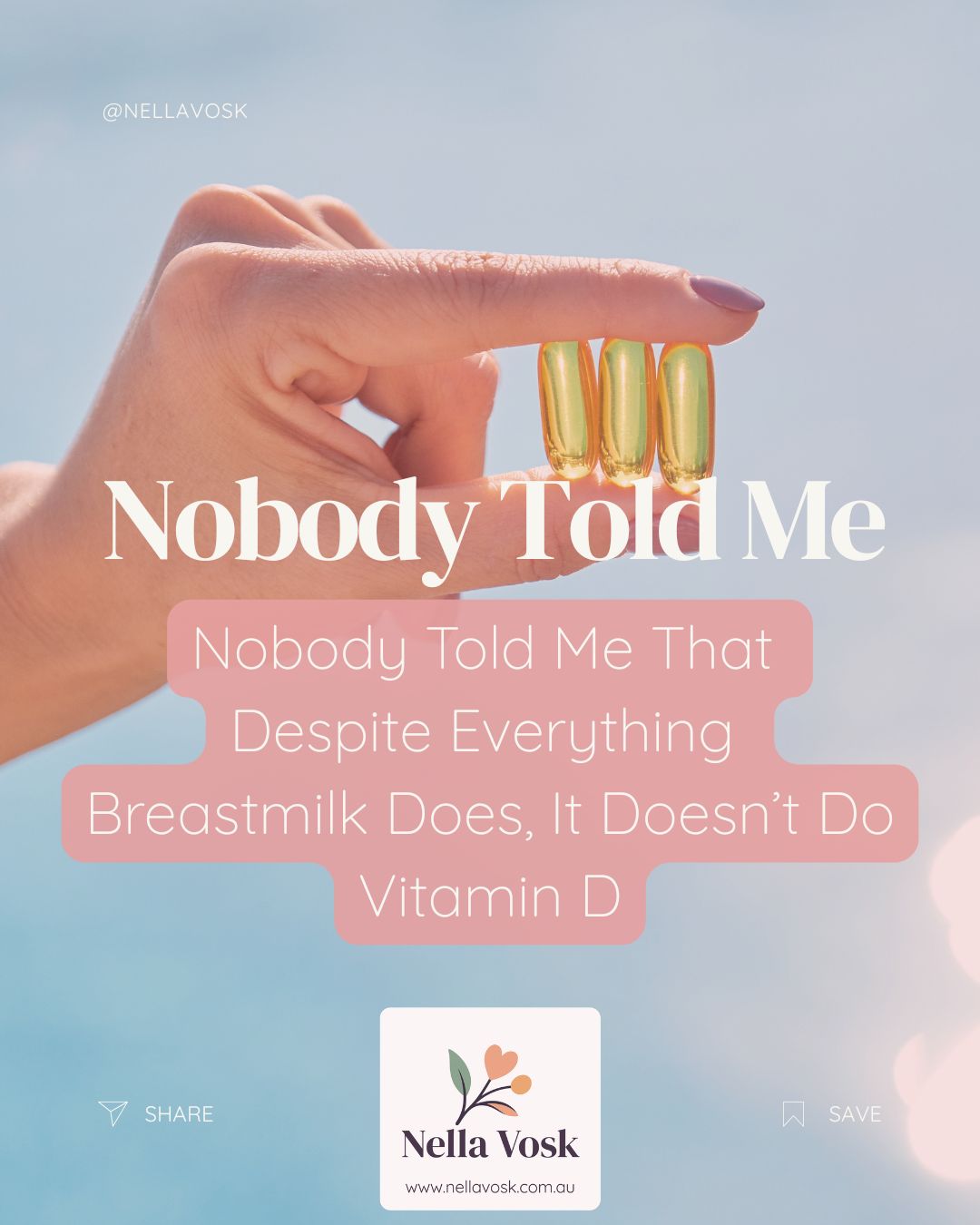
    Nobody Told Me That Despite Everything Breastmilk Does, It Doesn’t Do Vitamin D
    Nobody Told Me That Despite Everything Breastmilk Does, It Doesn’t Do Vitamin D

    Read More
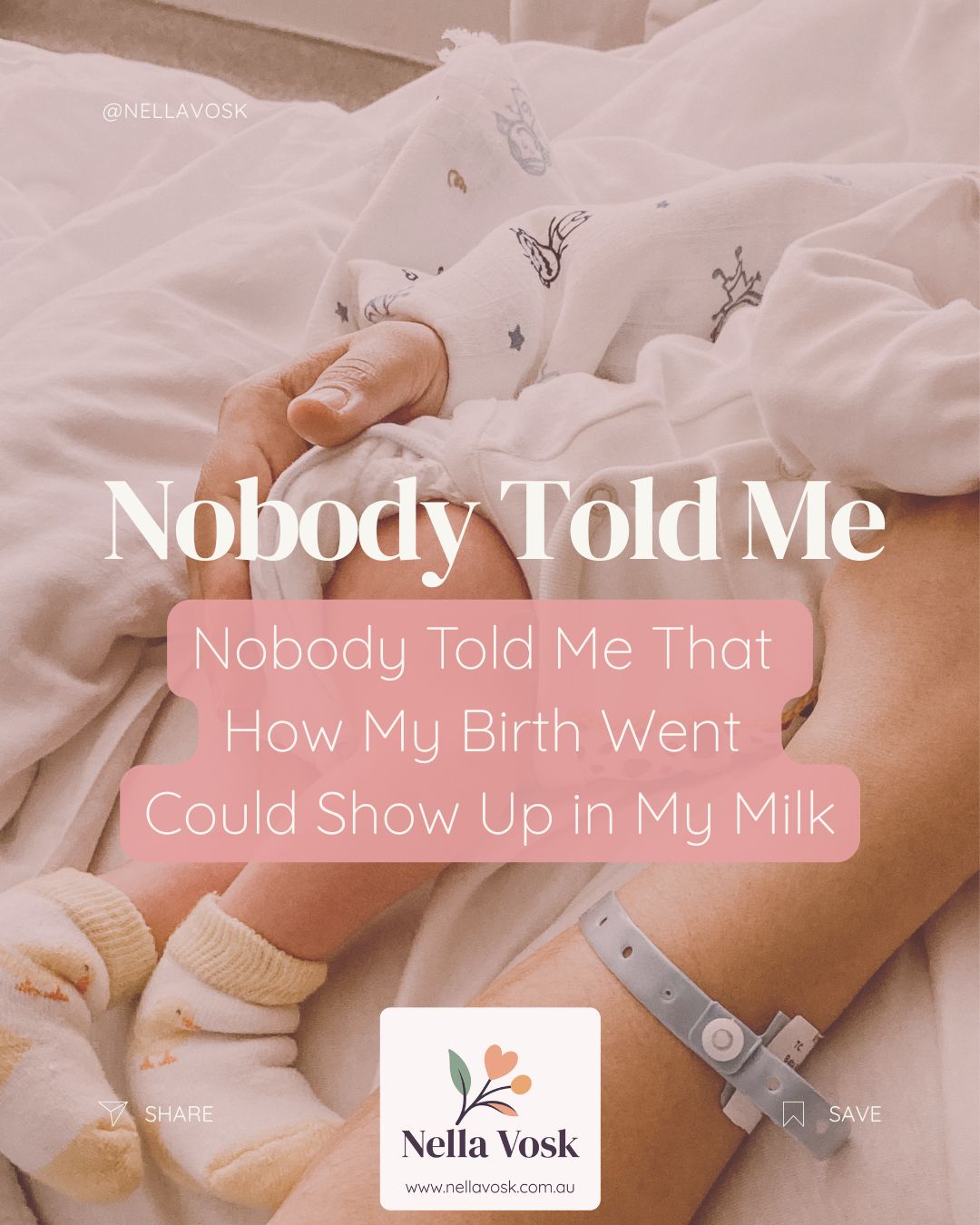
    Nobody Told Me That How My Birth Went Could Show Up in My Milk
    Nobody Told Me That How My Birth Went Could Show Up in My Milk

    Read More
    Nobody Told Me That My Body Would Notice the Shift Back to Work Before I Even Got There
    Nobody Told Me That My Body Would Notice the Shift Back to Work Before I Even Got There

    Read More