

• Add description, images, menus and links to your mega menu

  • A column with no settings can be used as a spacer

  • Link to your collections, sales and even external links

  • Add up to five columns

  • da

  • A column with no settings can be used as a spacer

  • Link to your collections, sales and even external links

  • Add up to five columns

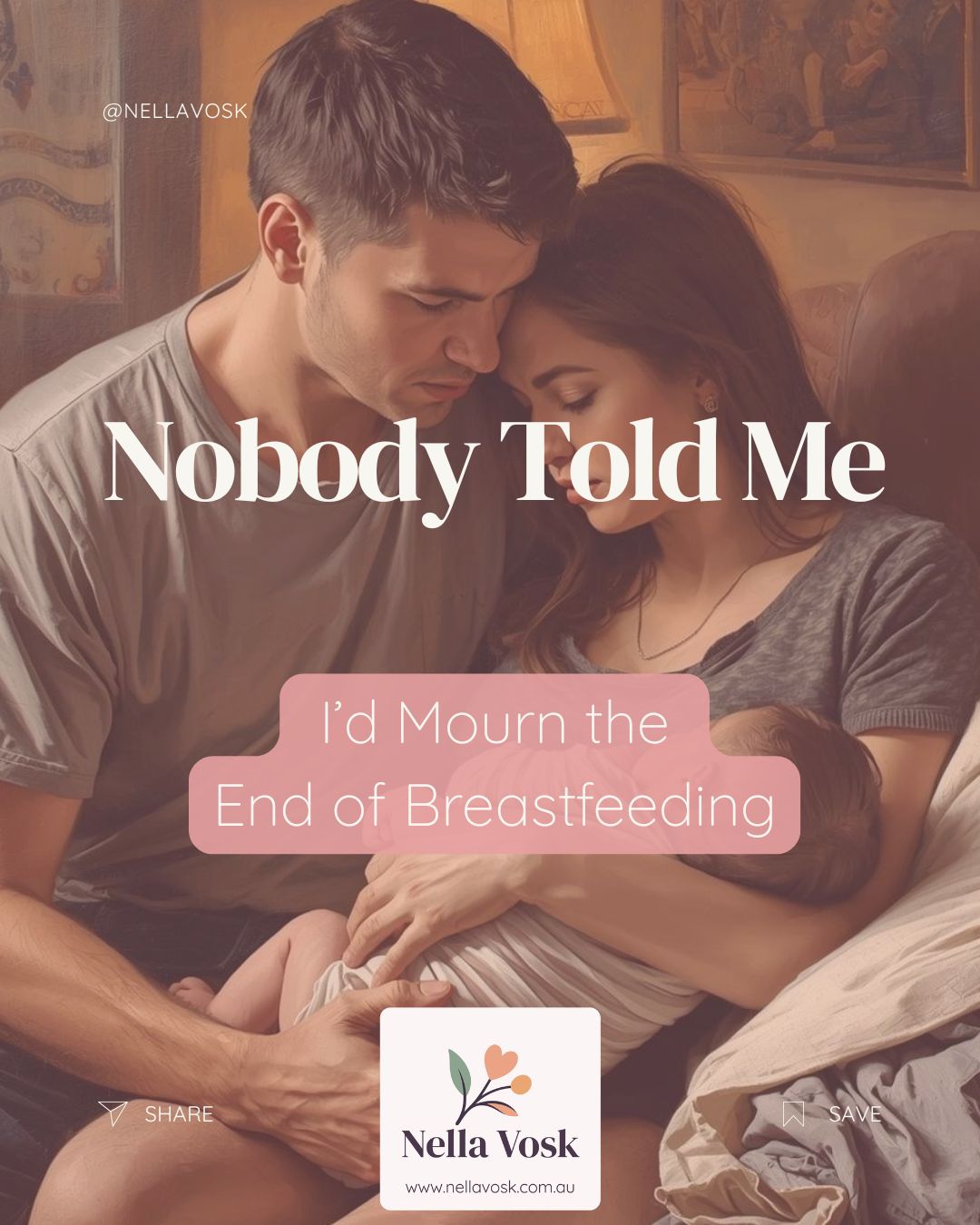
  • Nobody Told Me I’d Mourn the End of Breastfeeding

    Founder of Nella Vosk • 14+ years supporting families across motherhood, feeding, and early childhood wellbeing

    Nobody Told Me I’d Mourn the End of Breastfeeding


    This article is part of the Nella Vosk Postpartum Nutrition & Recovery: Complete Guide for New Mothers — your comprehensive resource on rebuilding your body and yourself after birth.

    This article is part of Nella Vosk’s Nobody Told Me series — a growing collection of posts about the information gap that too many mothers encounter after birth. Every article in this series starts from a moment a mother wasn’t told something she needed to know, and works back through the clinical truth behind it. You can find the full series at nellavosk.com.au/pages/nobody-told-me.


    Nobody told me I’d cry when it was over — even when I chose to stop.

    I had been ready to wean. Or I thought I had been. The feeds had become infrequent, my daughter was thriving on food, and practically speaking the timing felt right. I made the decision calmly and deliberately, with no ambivalence I could name.

    And then it ended. And I cried in the shower for three days.

    Nobody had told me that stopping breastfeeding — even chosen, even peaceful, even overdue by some measures — could feel like a grief. That there were hormones involved in that grief that would make it feel larger and stranger and more destabilising than anything else going on in my life. That the sadness wasn’t a sign I’d made the wrong decision. It was a sign my body had been producing a particular cocktail of feel-good hormones for the entire duration of the feeding relationship, and those hormones were now withdrawing.

    This post is for every mother who has found herself feeling sad about stopping breastfeeding and wondering what is wrong with her. Nothing is wrong with her. This is what stopping breastfeeding can do to a body that was built to do this — and nobody thought to warn her.

    The Hormonal Truth Behind Weaning Grief

    Breastfeeding is not just a feeding method. It is a sustained hormonal state.

    For the entire duration of the feeding relationship, your body has been producing elevated levels of two hormones that have a direct and significant effect on mood, calm, and emotional connection:

    Prolactin

    Prolactin is the hormone responsible for milk production. What is less often discussed is that prolactin also has mood-regulating effects. It promotes feelings of calm, reduces anxiety, and acts as a mild natural sedative. Breastfeeding mothers have elevated prolactin throughout the feeding relationship — and prolactin falls when breastfeeding stops.

    Oxytocin

    Oxytocin is released with every feed and every let-down. It is sometimes called the bonding hormone or the love hormone because of its role in attachment, connection, and emotional warmth. It is the same hormone released during physical touch and intimacy. It is significantly calming. And it drops when breastfeeding ends.

    When weaning occurs — whether gradually or abruptly — both prolactin and oxytocin fall. For many mothers, this hormonal withdrawal is felt as a distinct and sometimes overwhelming emotional experience: flat mood, sadness, irritability, anxiety, a sense of loss that feels disproportionate to the circumstances.

    This is not a personality failing. It is not evidence that you made the wrong decision. It is withdrawal from hormones that have been chemically sustaining your emotional equilibrium for months or years. When they drop, the gap is felt.

    Australian perinatal mental health organisation PANDA recognises post-weaning depression as a real and distinct condition — and notes that it can occur even when weaning is gradual and wanted. The drop in prolactin and oxytocin affects mood regardless of how the weaning happened or how ready the mother felt.

    The Grief Is Real Even When the Decision Was Yours

    One of the most confusing aspects of emotional weaning is the disconnect between the decision and the feeling.

    Many mothers who experience weaning grief chose to wean. They were ready. They had good reasons. They might even feel relief alongside the sadness — which is its own source of confusion. How can you feel both relieved and bereft about the same thing at the same moment?

    The answer is that the grief and the relief are not contradictory. They are operating at different levels. The relief is cognitive — based on the reasons you decided to stop. The grief is hormonal and physical — based on the withdrawal of a sustained chemical state that your body had adapted to. Both are real. Neither cancels the other out.

    There is also an identity dimension to weaning grief that is worth naming. For many mothers, particularly those who breastfed through difficulty or who fed for longer than they expected, the feeding relationship becomes part of how they understood their role as a mother. Weaning is not just the end of a feeding method — it is the end of a particular physical intimacy, a particular way of being needed, a particular shape of the relationship with this child. Grieving that ending is not sentimental. It is appropriate.

    When Weaning Emotions Become Something More

    For most mothers, the emotional intensity of weaning settles within a few weeks as prolactin and oxytocin find a new baseline. The sadness lifts, the mood stabilises, and the grief transforms into something quieter — a tenderness about what the feeding relationship was, rather than an acute loss of it.

    But for some mothers, post-weaning depression is more persistent and more functionally impairing than the normal emotional adjustment. Signs that the weaning experience may have moved beyond typical grief include:

    • Persistent low mood lasting more than two to three weeks after weaning is complete

    • Anxiety that is constant rather than intermittent

    • Significant difficulty with daily function — work, parenting, basic self-care

    • Feelings of worthlessness, hopelessness, or inability to feel pleasure

    • Tearfulness that does not ease over time

    • Physical symptoms including sleep disruption, appetite changes, or persistent fatigue beyond what is explained by ordinary tiredness

    Post-weaning depression is a recognised condition and it is treatable. It is not a sign of weakness or of failure. It is a physiological consequence of hormonal withdrawal in a body that may already be nutritionally depleted and running on insufficient reserves.

    If you are experiencing these symptoms, please speak to your GP or contact PANDA (Perinatal Anxiety & Depression Australia) on 1300 726 306. You do not have to wait until things are severe before reaching out.

    Why Abrupt Weaning Is Harder on the Body and Mind

    The speed of weaning significantly affects the intensity of the emotional and hormonal experience.

    Gradual weaning — dropping one feed every few days or weeks, allowing the body to adjust slowly — gives prolactin and oxytocin time to decrease incrementally rather than cliff-dropping all at once. The hormonal withdrawal is the same process but spread over a longer period, which generally makes the emotional adjustment less acute.

    Abrupt weaning — stopping all feeds suddenly, sometimes due to illness, medication, return to work, or a baby who self-weans unexpectedly — creates a rapid hormonal drop that many mothers describe as feeling like a sudden emotional floor-drop. The grief, flat mood, and anxiety can be significantly more intense when weaning happens quickly.

    If you had no choice about the timing or speed of your weaning, understanding this physiological mechanism can help contextualise what you are feeling. Your body is not malfunctioning. It is responding to a dramatic and rapid hormonal change it did not have time to adjust to gradually.

    The Nutritional Dimension Nobody Talks About

    Here is something that almost no weaning guidance covers: the nutritional picture after weaning matters for how you feel emotionally during the transition.

    Throughout breastfeeding, your body has been drawing heavily on nutrient reserves to sustain milk production. By the time weaning occurs, many mothers are significantly depleted in iron, DHA, zinc, magnesium, B vitamins, and iodine — nutrients that are directly involved in mood regulation, energy production, and nervous system function.

    When prolactin and oxytocin withdraw during weaning, a body that is already nutritionally depleted has fewer biochemical resources with which to manage the transition. The hormonal withdrawal happens in a context of low iron, low DHA, low magnesium — nutrients that support the very neurological systems being asked to re-regulate. The result is often a deeper and more prolonged emotional experience than might otherwise occur in a well-nourished body.

    This is why weaning is not the moment to cut nutrition loose. It is one of the moments when nutritional attention matters most.

    Key nutrients for emotional wellbeing post-weaning

    • DHA (omega-3): directly involved in mood regulation and associated with reduced risk of depression. Found in oily fish, walnuts, chia seeds, and flaxseed. This is typically very depleted post-breastfeeding.

    • Magnesium: supports nervous system calm and sleep quality. Breastfeeding draws heavily on magnesium stores. Found in dark leafy greens, pumpkin seeds, almonds, and dark chocolate.

    • Iron: deficiency is directly associated with low mood, poor concentration, and fatigue that amplifies emotional difficulty. A ferritin check at weaning is worth requesting.

    • B vitamins (especially B6 and B12): support neurotransmitter production including serotonin and dopamine. Found in meat, fish, eggs, legumes, and wholegrains.

    • Protein: provides the amino acid building blocks for mood-regulating neurotransmitters. Consistent protein at every meal is one of the highest-leverage nutritional choices in the post-weaning period.

    Eating well during and after weaning is not self-indulgence. It is part of the hormonal recovery process. A body that has been nourishing a baby for months or years deserves active nourishment in return.

    What Actually Helps with Weaning Grief

    There is no equivalent of the six-week check for weaning. There is no formal point at which the healthcare system asks how you are doing emotionally after the feeding relationship ends. Most mothers navigate this transition entirely without acknowledgement that it is a transition at all.

    What actually helps is a combination of the physiological, the practical, and the permission to grieve:

    Wean gradually where possible

    If your circumstances allow, dropping one feed every several days rather than stopping all at once gives your hormones time to adjust incrementally. Even slowing down the speed of an already-in-progress abrupt wean can make a difference to the emotional intensity of the transition.

    Support your nutritional status

    Ask your GP for an iron and ferritin check around the time of weaning, particularly if you have been breastfeeding for six months or more. Address any deficiencies actively. Continue eating as well as you were during breastfeeding — your body still needs that level of nourishment as it transitions, even though the caloric demand is reducing.

    Create new connection rituals

    Much of what feels like loss in weaning is the loss of a specific physical intimacy — the closeness, the stillness, the particular quality of being needed in that way. Creating new rituals of physical closeness with your child — a morning cuddle, a particular bedtime routine, skin-to-skin even in non-feeding contexts — can help the nervous system find new pathways for the oxytocin and connection it is used to.

    Name the grief out loud

    Weaning grief is significantly more common than the silence around it suggests. Many mothers who felt it assumed they were the only one, or that it was evidence of some pathology. Telling someone else — a partner, a friend, a GP — that weaning has been emotionally hard is not a sign of weakness. It is an accurate description of a real physiological experience that deserves acknowledgement.

    Give it time

    For most mothers, the emotional intensity of weaning eases within two to four weeks as the new hormonal baseline establishes. This timeline can feel very long when you are in it. Knowing that what you are experiencing is time-limited and physiologically normal does not make it easy — but it does make it less frightening.

    It Is Okay to Grieve Something You Also Chose

    This post ends where it began: with the shower.

    Grief and relief can coexist. Choosing something does not make losing it painless. Bodies go through real hormonal transitions that produce real emotional consequences, independent of whether the head agreed with the decision.

    The sadness you feel about stopping breastfeeding — however long you breastfed, whether the decision was yours or the timing was forced, whether you struggled through it or found it easy — is not irrational. It is not a sign you did the wrong thing. It is not weakness.

    It is what a body does when something it was built for, something it has been sustaining for months, comes to an end.

    Nobody told you it might feel like this. But it is real. And it is okay.

    Keep Reading

    These posts support the broader postpartum recovery picture:

    Signs of Postpartum Depletion (And What to Do)

    Postpartum Nutrition & Recovery: Complete Guide for New Mothers

    Best Postpartum Snacks for Energy and Milk Supply

    Best Tea for Postpartum Recovery (What Actually Helps)

    Best Foods for Lactation: A Complete Guide for Australian Mums

    From Colostrum to Mature Milk: The Stages of Breastmilk Production

    10 Proven Ways to Increase Your Milk Supply


    Your body nourished a baby. Now it is time to nourish you. The Nella Vosk postpartum recovery range is formulated by a Certified Postpartum Nutrition Professional to support the nutritional recovery that weaning — like birth before it — deserves.


    ABOUT THE AUTHOR

    Kelly Northey is a Certified Postpartum Nutrition Professional (CPPNP) and founder of Nella Vosk, an Australian maternal and family wellness brand. She specialises in postpartum recovery, breastfeeding nutrition, and the things mothers are not told about their own bodies at the moments they most need to know them.
    Learn more about Kelly.


    Also in Nobody Told Me: Breastfeeding & Milk Supply

    Nobody Told Me That Despite Everything Breastmilk Does, It Doesn’t Do Vitamin D
    Nobody Told Me That Despite Everything Breastmilk Does, It Doesn’t Do Vitamin D

    Read More
    Nobody Told Me That How My Birth Went Could Show Up in My Milk
    Nobody Told Me That How My Birth Went Could Show Up in My Milk

    Read More
    Nobody Told Me That My Body Would Notice the Shift Back to Work Before I Even Got There
    Nobody Told Me That My Body Would Notice the Shift Back to Work Before I Even Got There

    Read More