


• Add description, images, menus and links to your mega menu

  • A column with no settings can be used as a spacer

  • Link to your collections, sales and even external links

  • Add up to five columns

  • da

  • A column with no settings can be used as a spacer

  • Link to your collections, sales and even external links

  • Add up to five columns

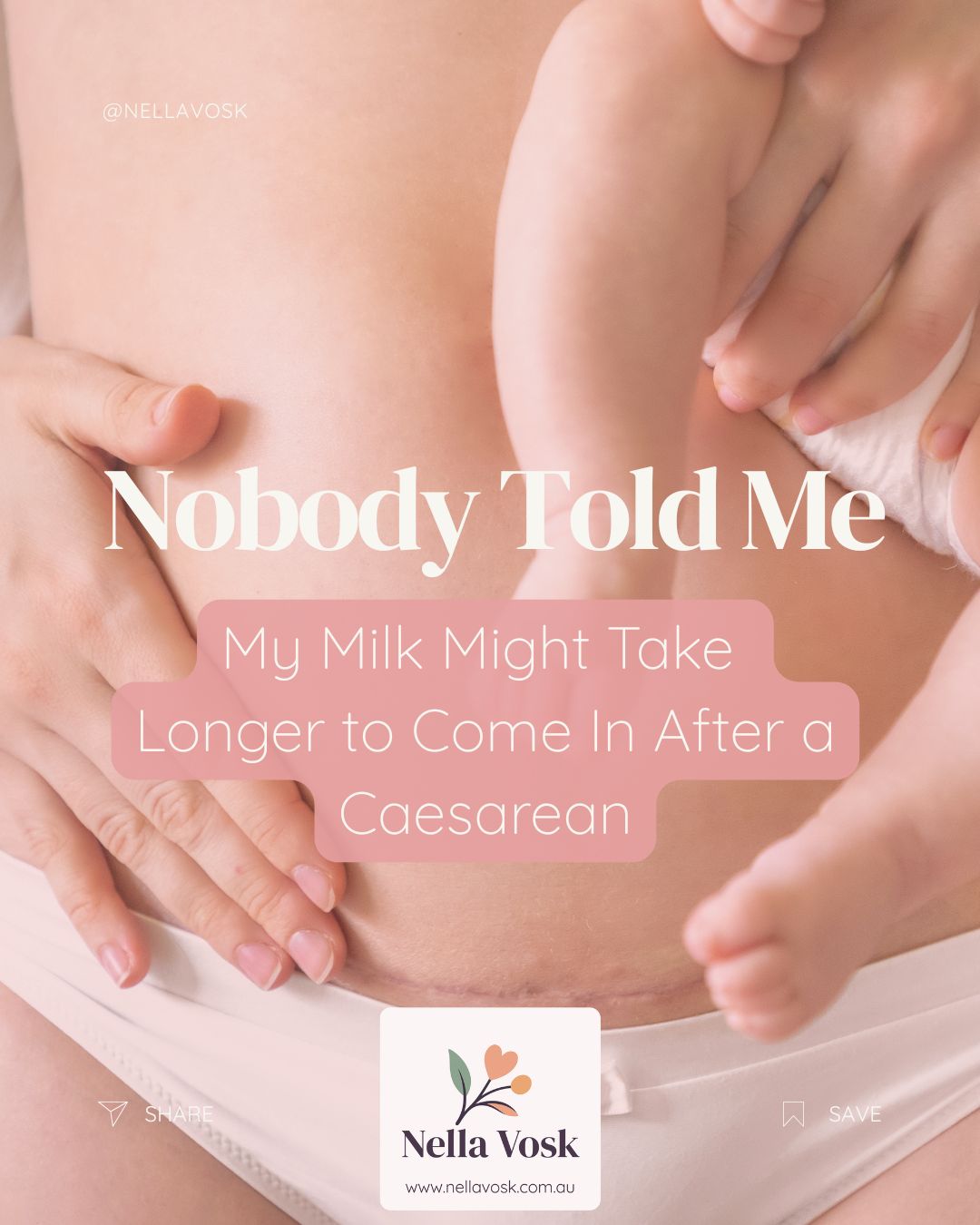
  • Nobody Told Me My Milk Might Take Longer to Come In After a Caesarean — and That This Wasn’t Failure

    Founder of Nella Vosk • 14+ years supporting families across motherhood, feeding, and early childhood wellbeing

    Nobody Told Me My Milk Might Take Longer to Come In After a Caesarean — and That This Wasn’t Failure


    This article is part of the Nella Vosk Breastfeeding Nutrition & Milk Supply: Evidence-Based Guide for Australian Mothers — your comprehensive resource on nourishing yourself and your baby through every stage of the feeding journey.

    This article is part of Nella Vosk’s Nobody Told Me series — a growing collection of posts about the information gap that too many mothers encounter after birth. Every article in this series starts from a moment a mother wasn’t told something she needed to know, and works back through the clinical truth behind it. You can find the full series at nellavosk.com.au/pages/nobody-told-me.


    Nobody told me my milk might take longer to come in after a caesarean — and that this wasn’t failure.

    In Australia, approximately one in three babies is born by caesarean section — around 36% of all births, one of the highest rates in the world. Yet the breastfeeding-specific challenges of caesarean birth remain remarkably poorly explained in standard antenatal and postnatal care. Mothers who planned to breastfeed and had a caesarean are frequently left to navigate delayed milk onset, positioning around a surgical wound, questions about pain medication and breastfeeding safety, and a body that is simultaneously recovering from major abdominal surgery and trying to initiate a feeding relationship — without the clinical preparation that would have helped them do any of this confidently.

    This post is that preparation. Whether your caesarean was planned or emergency, whether you’re preparing for a c-section birth or trying to understand what happened in the days after one, here is what breastfeeding after a caesarean actually involves — and why the challenges you encountered were physiological, not personal.

    Why Milk Comes In Later After a Caesarean

    The most consistent finding in the research on breastfeeding after a caesarean is that milk onset — the point at which colostrum transitions to mature milk — tends to occur later than after a vaginal birth, often by 24 to 48 hours.

    The reason is hormonal, and it begins in the moments before and during birth.

    During a vaginal birth, the process of labour triggers a cascade of hormonal events that prime the body for breastfeeding. The sustained oxytocin release of labour contractions, the cortisol of the birth effort, and the hormonal surge of the pushing stage and delivery together create a hormonal environment that signals the body to begin milk production. By the time a baby born vaginally is placed on their mother’s chest, that hormonal priming has been running for hours.

    In a planned (elective) caesarean, labour has not occurred. There is no prolonged oxytocin surge from contractions. There is no birth hormonal cascade. The body receives the arrival of the baby without the preparatory hormonal sequence that a vaginal birth provides. The result is that the prolactin-driven transition from colostrum to mature milk is often delayed — not because the body cannot make milk, but because the usual starting signal was absent or abbreviated.

    In an emergency caesarean, the picture is more varied. If labour had progressed before the surgery, some of the hormonal priming will have occurred. If the caesarean was performed before labour began (as in some emergency situations involving a maternal or foetal indication), the outcome may be similar to a planned caesarean.

    This delay in milk onset after a caesarean is well-documented and is not a sign that breastfeeding is failing or that the body cannot produce milk. It is a predictable hormonal consequence of a particular mode of delivery, and it is manageable with the right support in the right timeframe.

    When Does Milk Come In After a C-Section?

    After a vaginal birth, mature milk typically comes in between days two and four. After a caesarean, the same transition often occurs between days three and five — though the range is wide, and individual variation is significant.

    Colostrum is present from before birth and is available from the breast from the moment of delivery, regardless of birth mode. A caesarean-born baby receives colostrum from the first feed, just as a vaginally-born baby does. The delay is in the transition from colostrum to the higher-volume mature milk, not in the availability of early milk.

    What this means practically: a caesarean-born baby being fed on demand in the first 48 to 72 hours is receiving colostrum, which is nutritionally appropriate and sufficient for their stomach capacity at this stage. Anxiety about “not having enough milk” in this window is understandable but, in most cases, premature. The volume of colostrum is designed for a newborn’s stomach — which at day one holds approximately five to seven millilitres per feed. The perceived absence of milk is more often an absence of the high-volume flush of mature milk, not an absence of nutrition for the baby.

    For the full picture of colostrum, transitional milk, and mature milk stages, the article on the stages of breastmilk production explains what is happening at each stage and what a baby actually needs.

    The Critical First 48 Hours After a Caesarean

    The actions taken in the first 48 hours after a caesarean have a disproportionate impact on breastfeeding outcomes. This is the window in which the body’s prolactin response can be maximised or undermined — and the window in which most c-section mothers are also managing acute surgical recovery, pain, restricted mobility, and the overwhelming sensory experience of a new baby.

    Early skin-to-skin wherever possible

    The single most evidence-supported intervention for supporting breastfeeding initiation after a caesarean is early skin-to-skin contact. Skin-to-skin triggers prolactin release, stimulates the baby’s rooting and feeding reflexes, reduces cortisol in both mother and baby, and begins the conditioned hormonal response to feeding that the labour process would normally have initiated.

    In many Australian hospitals, immediate skin-to-skin in the operating theatre is now offered for stable planned caesareans. If you are planning a caesarean and wish to have skin-to-skin in theatre, discuss this with your obstetrician and the anaesthetic team before your surgery date. If for clinical reasons immediate skin-to-skin is not possible, early skin-to-skin in recovery should be prioritised as soon as both you and your baby are stable. If you cannot do skin-to-skin yourself immediately, your support person can do skin-to-skin with the baby until you are able to. The article on skin-to-skin with newborns covers the full picture of what skin-to-skin does and how to advocate for it.

    Feed or express early and often

    Every feed or expression session in the first 48 hours is a prolactin stimulus. The more frequently the breast is stimulated by suckling or expressing in this window, the stronger the signal to the body to begin milk production in volume. Aiming for eight to twelve feeds or expression sessions per 24 hours in the first days after a caesarean — whether at the breast or by hand expressing colostrum — is the most reliable strategy for shortening the milk onset delay.

    If your baby is in the NICU or is unable to breastfeed directly for clinical reasons, begin hand expressing colostrum as soon as you are physically able after surgery — ideally within the first six hours. Colostrum expressed by hand can be given to the baby and simultaneously stimulates the prolactin response that drives milk production.

    Request lactation support proactively

    The positioning challenges of breastfeeding around a caesarean incision are real and require specific knowledge to manage. Requesting a visit from the hospital’s lactation consultant or midwife in the first 24 hours is not a sign of struggle — it is the most effective use of the support available. Do not wait until a problem is established before asking for help.

    Best Positions for Breastfeeding After a Caesarean

    The standard cradle hold — baby across the front of the body — places pressure directly on the caesarean incision and is uncomfortable or painful for most c-section mothers in the first days and weeks after surgery. Three alternative positions are particularly well-suited to breastfeeding after a caesarean:

    The football hold (clutch hold)

    The baby is tucked under the arm on the same side as the breast you are feeding from, with their body running alongside yours rather than across your front. The baby’s head is at the breast, their body is under your arm, and their feet point behind you. This keeps the baby’s weight entirely away from the incision site. It is one of the most recommended positions for breastfeeding after a caesarean and also works well for mothers with larger breasts or flat nipples, as it allows good control of the latch.

    Side-lying

    Both mother and baby lie on their sides facing each other, with the baby’s mouth level with the lower breast. A pillow between the knees and one supporting the mother’s back can make this position more comfortable. Side-lying removes all pressure from the abdomen and allows a relaxed, low-effort feed — particularly useful overnight and in the early recovery days. The main limitation is that it can be difficult to achieve a good latch initially without assistance, and it requires the ability to lie flat comfortably, which some post-surgical mothers find difficult in the first 24 to 48 hours.

    Laid-back feeding (biological nurturing)

    The mother reclines at approximately 45 degrees, supported by pillows, and the baby lies chest-to-chest on top of the mother with their head at the breast. Gravity holds the baby in position and the mother’s body provides full support. Because the baby is lying on top of the mother rather than across the front, this position avoids incision pressure while still allowing the close physical contact that supports both feeding and the oxytocin-driven hormonal response of early breastfeeding.

    Whichever position you use, a firm pillow under the baby (if using cradle hold or other positions) or across the lap can provide a protective buffer between the baby’s weight and the incision site. Many mothers find that a specifically designed c-section pillow or a folded towel provides useful protection during feeds in the weeks of surgical recovery.

    Breastfeeding After Anaesthetic: Is It Safe?

    Breastfeeding after anaesthetic is one of the most common concerns for caesarean mothers, and one of the most often answered incompletely.

    Spinal or epidural anaesthesia

    The vast majority of planned and emergency caesareans in Australia are performed under regional anaesthesia — a spinal block, epidural, or combined spinal-epidural — which numbs the lower body while the mother remains conscious. The medications used in regional anaesthesia for caesarean sections transfer into breast milk in very small quantities and are considered compatible with breastfeeding. The Australian Breastfeeding Association and the major anaesthetic professional bodies confirm that breastfeeding can begin as soon as both mother and baby are clinically stable after regional anaesthesia — there is no required waiting period.

    General anaesthesia

    General anaesthesia — where the mother is fully unconscious — is used in some emergency caesarean situations where a regional block cannot be performed or takes too long. After general anaesthesia, mothers are advised to wait until they are awake, alert, and able to hold the baby safely before attempting to breastfeed. This is a practical safety consideration, not a concern about the medication being unsafe for the baby. Most of the anaesthetic agents used in general anaesthesia are short-acting, and the quantity that transfers into colostrum or early milk is considered clinically insignificant.

    If you have specific concerns about the medications used in your caesarean and their compatibility with breastfeeding, ask your anaesthetist, obstetrician, or the hospital pharmacist — or use the LactMed database, which provides specific information on medication transfer into breast milk. The Australian Breastfeeding Association helpline (1800 686 268) can also advise on specific medication concerns.

    Post-surgical pain medications

    Most pain relief medications used in the days following a caesarean section are compatible with breastfeeding. Paracetamol and ibuprofen — the first-line post-operative analgesics — are both considered safe during breastfeeding. Stronger opioid-based medications (such as oxycodone or tramadol) are sometimes prescribed for the first days of post-surgical pain; these transfer into breast milk in small quantities and are generally considered acceptable for short-term use while breastfeeding, but should be taken at the lowest effective dose for the shortest time needed. Discuss pain management specifically in the context of breastfeeding with your medical team before or after surgery.

    Undermedicated pain after a caesarean is itself a risk to breastfeeding. A mother who is in significant pain is less likely to attempt feeding, less likely to achieve let-down, and more likely to tense during feeds in ways that impair latch. Adequate pain control is not a risk to breastfeeding — it is part of the foundation for it.


    The Additional Nutritional Demands of Breastfeeding After a Caesarean

    A caesarean section is a major surgery with significant nutritional consequences that are almost never addressed in standard postnatal care. The blood loss of a caesarean — typically 750 to 1,000ml or more, compared to 300 to 500ml in an uncomplicated vaginal birth — produces a substantially higher acute iron depletion load. A mother who begins breastfeeding after a caesarean is doing so from a lower iron baseline than a mother who delivered vaginally.

    At the same time, the surgical wound requires the same healing nutrients as any soft tissue injury: protein for tissue repair, zinc for immune and healing function, vitamin C for collagen synthesis, and adequate overall calories to support both wound healing and the caloric demands of milk production.

    These demands run simultaneously and are significant. A breastfeeding mother recovering from a caesarean section has higher nutritional requirements than a breastfeeding mother recovering from an uncomplicated vaginal birth — and is also more likely to be in a hospital environment where food quality and access are limited, and where the physical challenges of recovery make eating consistently difficult.

    The most critical nutritional priorities in the first weeks of breastfeeding after a caesarean:

    • Iron: Request a ferritin test at or after the six-week check. Given the higher blood loss of caesarean delivery, iron deficiency without anaemia is very common and significantly worsens fatigue, fog, and the emotional capacity to sustain breastfeeding. The article on iron-rich foods for postpartum recovery covers the full approach.

    • Protein: Wound healing after abdominal surgery has elevated protein requirements. Aim for consistent protein at every meal and snack — eggs, meat, fish, legumes, dairy, nuts, seeds.

    • Vitamin C: Supports collagen synthesis for incision healing and improves non-haem iron absorption. Citrus, kiwi, capsicum, broccoli, strawberries.

    • Zinc: Critical for immune function and wound healing, and depleted by both surgery and breastfeeding. Red meat, pumpkin seeds, legumes, wholegrains.

    • Caloric adequacy: The combined demand of surgical recovery and breastfeeding is significant. Eating enough — consistently, throughout the day — is one of the highest-leverage actions available. See the guide to best postpartum snacks for energy and milk supply for one-handed, accessible options.

    If Your Milk Is Slow to Come In: What to Do

    If you are past day five after your caesarean and your milk does not yet feel established — no sense of fullness, no let-down, no visible milk at the breast — the following steps are worth taking:

    • Increase feeding or expressing frequency: the single most effective intervention for delayed milk onset is more frequent, more thorough breast stimulation. Aim for at least eight to ten feeds or expression sessions per 24 hours, including at least one overnight.

    • Add power pumping: power pumping — a pattern of pumping that mimics cluster feeding by alternating short pump intervals — can be a highly effective way to stimulate supply when direct feeding frequency is limited by the logistics of surgical recovery. The article on power pumping to increase milk supply covers the protocol in detail.

    • Request a lactation consultation: a delayed milk onset after a caesarean that persists beyond day five warrants an assessment by an IBCLC to rule out retained placental tissue (which can suppress prolactin), thyroid dysfunction, or other factors that may be contributing.

    • Ensure you are eating and drinking adequately: dehydration and significant caloric deficit both impair milk production. If the realities of hospital recovery or postnatal life at home have made eating consistently difficult, address this as a priority.

    For the comprehensive supply-building framework beyond the early days, the article on 10 proven ways to increase your milk supply covers the full evidence-based approach.

    Keep Reading

    These posts connect to breastfeeding after a caesarean:

    Skin-to-Skin with Newborns: Benefits, Timing & Tips

    From Colostrum to Mature Milk: The Stages of Breastmilk Production

    Postpartum Bleeding (Lochia): What’s Normal After Birth

    Iron-Rich Foods for Postpartum Recovery

    Best Postpartum Snacks for Energy and Milk Supply

    Power Pumping to Increase Milk Supply

    10 Proven Ways to Increase Your Milk Supply


    Breastfeeding after a caesarean asks a lot of a body that is simultaneously recovering from major surgery. The Nella Vosk Day Night Breastfeeding Box Set is designed to support the nutritional demands of breastfeeding at every hour of the day — formulated by a Certified Postpartum Nutrition Professional who understands that the caesarean recovery and the feeding relationship are not separate challenges but one compounded one.


    ABOUT THE AUTHOR

    Kelly Northey is a Certified Postpartum Nutrition Professional (CPPNP) and founder of Nella Vosk, an Australian maternal and family wellness brand. She specialises in breastfeeding nutrition, milk supply, and the clinical realities of postpartum recovery after all modes of birth.
    Learn more about Kelly.


    Also in Nobody Told Me: Breastfeeding & Milk Supply

    Nobody Told Me That Despite Everything Breastmilk Does, It Doesn’t Do Vitamin D
    Nobody Told Me That Despite Everything Breastmilk Does, It Doesn’t Do Vitamin D

    Read More
    Nobody Told Me That How My Birth Went Could Show Up in My Milk
    Nobody Told Me That How My Birth Went Could Show Up in My Milk

    Read More
    Nobody Told Me That My Body Would Notice the Shift Back to Work Before I Even Got There
    Nobody Told Me That My Body Would Notice the Shift Back to Work Before I Even Got There

    Read More