

• Add description, images, menus and links to your mega menu

  • A column with no settings can be used as a spacer

  • Link to your collections, sales and even external links

  • Add up to five columns

  • da

  • A column with no settings can be used as a spacer

  • Link to your collections, sales and even external links

  • Add up to five columns

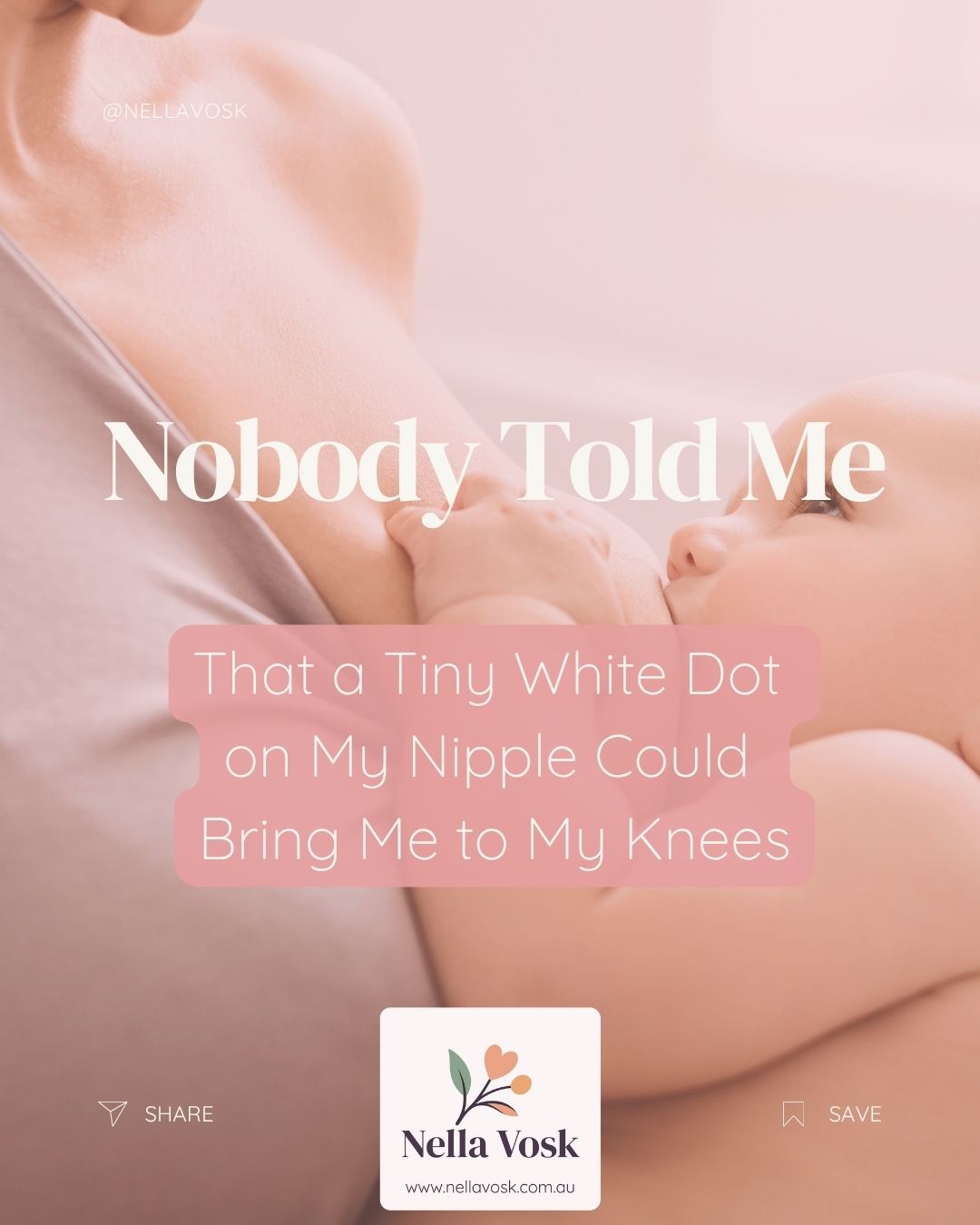
  • Nobody Told Me That a Tiny White Dot on My Nipple Could Bring Me to My Knees

    Founder of Nella Vosk • 14+ years supporting families across motherhood, feeding, and early childhood wellbeing

    Nobody Told Me That a Tiny White Dot on My Nipple Could Bring Me to My Knees


    This article is part of the Nella Vosk Breastfeeding Nutrition & Milk Supply: Evidence-Based Guide for Australian Mothers — your comprehensive resource on nourishing yourself and your baby through every stage of the feeding journey.

    This article is part of Nella Vosk’s Nobody Told Me series — a growing collection of posts about the information gap that too many mothers encounter after birth. Every article in this series starts from a moment a mother wasn’t told something she needed to know, and works back through the clinical truth behind it. You can find the full series at nellavosk.com.au/pages/nobody-told-me.


    Nobody told me that a tiny white dot on my nipple could bring me to my knees.

    I remember the morning I first noticed it. A small white spot, barely the size of a pinhead, sitting at the tip of my nipple. I almost dismissed it. And then I tried to feed and felt a pain so sharp and localised that I genuinely couldn’t believe something that small could produce that sensation.

    I had no word for it. I didn’t know it was common. I didn’t know it had a name. I spent three days thinking I had nipple thrush before a midwife took one look and said “that’s a milk bleb” — at which point I had approximately forty follow-up questions that nobody had time to answer in a ten-minute appointment.

    If you have a white spot on your nipple from breastfeeding and you’re not sure what it is, why it hurts as much as it does, or what to do about it, this post is what I wish someone had handed me that morning.

    What a White Spot on Your Nipple from Breastfeeding Actually Is

    A milk bleb — also called a milk blister, a nipple bleb, or a blocked nipple pore — is a small blockage at the opening of one of the nipple’s milk duct pores. Your nipple has multiple small openings through which milk flows during feeding. When one of these pores becomes blocked — either by a thin layer of skin that has grown over it, a plug of thickened or dried milk, or inflamed tissue in the duct behind it — milk builds up behind the blockage and creates the characteristic white or pale yellow spot that is visible on the surface of the nipple.

    Milk blebs are not thrush. They are not an infection (though they can lead to one if left untreated). They are a mechanical blockage — a very small, very painful one — and understanding this distinction matters because the treatment is different.

    The Australian Breastfeeding Association notes that while the exact mechanism is not fully understood, white spots are often associated with inflammation in the duct or repeated trauma to the nipple surface — and that scientists believe they form when the opening of a milk-carrying duct becomes inflamed and closes over, stopping milk flow at that point.

    The pain is disproportionate to the size because the blockage creates pressure behind it. As milk builds up with no exit point, the pressure against the blocked pore is felt as a sharp, concentrated pain during feeding — and sometimes as a persistent ache between feeds.

    Milk Bleb, Thrush, or Friction Blister: How to Tell the Difference

    One of the most common sources of confusion around white spots on the nipple is distinguishing between a milk bleb, thrush on the nipple, and a friction blister. The treatment for each is different, so getting the right diagnosis matters.

    Milk bleb

    • Single white or pale yellow dot, most commonly at the tip of the nipple or on the nipple surface

    • Sharp, localised pain during feeding, sometimes a persistent ache between feeds

    • Pain is concentrated at the specific spot — not diffuse across the whole nipple or breast

    • The spot may look slightly raised or blister-like; it may become more prominent after a feed as milk pressure builds

    • May be accompanied by a blocked duct behind it

    Nipple thrush

    • Burning, shooting, or stabbing pain during and after feeding — often described as “knives” or “broken glass” inside the breast

    • Pain typically continues or worsens for 30 to 60 minutes after the feed ends

    • Nipple surface may look shiny, flaky, or slightly pink rather than having a single discrete white spot

    • Baby may show white patches inside the mouth that cannot be wiped away, or persistent red nappy rash

    • Pain is bilateral (both breasts) more often than a bleb, which is usually unilateral

    It is worth noting that the latest clinical research suggests that nipple yeast infections (thrush on the nipple surface) are less common than previously believed, and that many cases historically diagnosed as nipple thrush were actually deep breast pain from other causes. If you have been treated for nipple thrush repeatedly without resolution, a lactation consultant review is warranted.

    Friction blister

    • A clear or fluid-filled blister rather than a white solid spot

    • May be red-based or blood-tinged in some cases

    • Caused by mechanical friction — shallow latch, ill-fitting pump flange, or a nipple shield that has rubbed — rather than by a milk duct blockage

    • Pain is more generalised across the nipple rather than pinpoint-localised

    When in doubt, a lactation consultant can distinguish between these on examination. The article on when to see a lactation consultant is useful if you’re not sure whether professional support is warranted.

    Why Milk Blebs Happen

    Several factors are associated with milk bleb formation:

    Latch issues

    A shallow latch — where the baby has taken only the nipple rather than a deep mouthful of breast tissue — creates friction and compression trauma at the nipple tip with every suck. This repeated friction can damage the skin over a nipple pore and trigger bleb formation. This is one of the most common causes, particularly in the early weeks of breastfeeding before latch is established. If blebs are recurrent, latch assessment should always be part of the investigation. The guide to a good breastfeeding latch covers the assessment and correction process in detail.

    Oversupply and forceful let-down

    Mothers with a high milk supply or a forceful let-down are at higher risk of milk blebs because of the sustained pressure within the ducts. If milk is being produced faster than it is being removed, the increased pressure can drive milk toward the nipple pores with sufficient force to cause localised inflammation and blockage. The article on overactive let-down covers the management of oversupply in context.

    Infrequent or incomplete breast emptying

    Not fully draining the breast during feeds or pumping sessions increases the internal milk pressure and the risk of milk stasis in individual ducts. Switching to the second breast before the first is well-drained is a common pattern that contributes to this risk. Skipped feeds, scheduled rather than demand feeding, and sudden changes in feeding frequency (such as a baby sleeping longer overnight) can all trigger blebs.

    Bra or pump fit

    Underwire bras, bras that are too tight, or bra underwires sitting directly over a duct can create external pressure that restricts milk flow and triggers localised blockage. Pump flanges that are too small can also create friction and compression trauma at the nipple that predisposes to blebs.

    High-fat diet and milk composition

    Some practitioners and mothers report that blebs are more frequent or persistent during periods of high saturated fat intake. The proposed mechanism is that higher saturated fat concentrations in milk can contribute to the formation of milk plugs within the duct. This is not definitively proven, but is worth noting for mothers who experience recurrent blebs.


    Milk Bleb Treatment: What Actually Helps

    Most milk blebs will resolve on their own within several days to weeks. The goal of treatment is to relieve the pain, encourage resolution, and prevent the complication of mastitis — which can develop if the blocked duct is not cleared and inflammation progresses to infection.

    Warm compress before feeding

    Apply a warm, wet cloth to the nipple for two to three minutes immediately before feeding or expressing. The warmth softens the skin over the bleb and promotes blood flow, making it more likely that the pressure of feeding will clear the blockage. This is the most consistent first-line approach and should be tried before any more invasive management.

    Feed or express frequently from the affected side

    The suction of your baby feeding is one of the most effective ways to clear a milk bleb. Feed from the affected breast first when your baby’s suck is strongest. If pain makes direct feeding difficult, expressing — by hand or by pump — maintains milk removal and reduces the pressure behind the blockage.

    Optimise your baby’s positioning

    Feeding with your baby’s chin pointing toward the bleb can direct the strongest suction pressure toward the blockage. This means feeding in a different position than usual — if the bleb is at the top of the nipple, for example, try positioning your baby with their feet toward your head. This is not comfortable but it is often very effective at clearing the bleb within one or two feeds.

    Gentle scraping or olive oil softening

    If the bleb has a thin skin layer over it, softening the skin first with a cotton ball soaked in olive oil (held against the nipple in your bra between feeds) can make clearing easier. After softening, some mothers find they can very gently dislodge the edge of the skin with a clean fingernail. This should be done with care and clean hands, and not with force.

    Needle opening by a healthcare provider

    For a bleb that is persistent and very painful, a lactation consultant or GP can open the skin covering using a sterile needle. This is not something to attempt at home with a non-sterile implement. If the bleb has not responded to home management after several days, or if pain is significantly interfering with feeding, this is the appropriate next step.

    If you develop redness, warmth, or swelling of the breast alongside a milk bleb, or if you develop flu-like symptoms (fever, body aches, chills), seek medical advice promptly. These are signs that the blocked duct may be progressing to mastitis, which requires treatment. The Australian Breastfeeding Association helpline (1800 686 268) can provide support and guide you on when to seek further care.

    Preventing Recurrent Milk Blebs

    Some mothers experience milk blebs once and never again. Others find them recurrent — clearing one only to have another appear, sometimes in the same location. If this is your experience, there are several approaches worth considering:

    Lecithin supplementation

    Sunflower or soy lecithin is the most consistently recommended supplement for recurrent blocked ducts and blebs. Lecithin is an emulsifier — it reduces the “stickiness” of milk fats, which may help prevent the milk plugs that contribute to bleb formation. The commonly cited dose is 1,200mg taken three to four times daily. This is generally considered safe during breastfeeding, but discuss with your GP or lactation consultant for appropriate dosage guidance specific to your situation.

    Daily nipple abrasion in the shower

    Gently rubbing the nipple with a soft face cloth in the shower each day can help prevent the skin from overgrowth over the nipple pores — one of the mechanisms behind bleb formation. This is a low-risk preventive measure worth trying if blebs are recurrent.

    Saturated fat reduction

    Reducing high-saturated fat foods (full-fat dairy in large amounts, processed meats, coconut oil in quantity) and replacing them with unsaturated fats (olive oil, oily fish, avocado, nuts) may reduce the stickiness of milk fats for some mothers prone to recurrent blebs. This is not definitively proven but is a reasonable dietary adjustment with no downside.

    Addressing the underlying cause

    If blebs are recurrent, the underlying driver — latch issue, oversupply, pump flange fit, bra fit — is almost certainly contributing. A lactation assessment aimed at identifying and addressing that driver is the most effective long-term prevention strategy.

    The Nutritional Context

    Milk blebs are a mechanical and inflammatory phenomenon, not primarily a nutritional one. But nutrition supports the tissue health and inflammatory regulation that affects how quickly blebs resolve and how likely they are to progress to mastitis.

    Anti-inflammatory dietary patterns — adequate omega-3 fatty acids from oily fish, plenty of vegetables, limited processed food, consistent hydration — support the body’s ability to resolve localised inflammation. A breastfeeding mother who is significantly dehydrated has more concentrated milk, which may increase the risk of milk stasis and plugging.

    Adequate caloric intake throughout breastfeeding — supported by nutrient-dense snacking — maintains the energy and tissue repair capacity needed to manage what is, after all, a repetitive physical demand on a small and sensitive area. The guide to best postpartum snacks for energy and milk supply covers the practical snacking picture in full.

    Keep Reading

    These posts connect to nipple health and breastfeeding challenges:

    How to Get a Good Breastfeeding Latch: Pain-Free Attachment Guide

    Overactive Let-Down: How to Help Baby Handle Fast Milk Flow

    When to See a Lactation Consultant

    10 Proven Ways to Increase Your Milk Supply

    Foods to Increase Milk Supply Naturally

    Brewer’s Yeast for Breastfeeding: What the Evidence Says

    Best Postpartum Snacks for Energy and Milk Supply


    Supporting your breastfeeding nutrition is part of supporting your breastfeeding body — including the tissue health that helps you recover from challenges like milk blebs. The Nella Vosk lactation range is formulated by a Certified Postpartum Nutrition Professional to nourish the whole breastfeeding mother, not just her milk supply.


    ABOUT THE AUTHOR

    Kelly Northey is a Certified Postpartum Nutrition Professional (CPPNP) and founder of Nella Vosk, an Australian maternal and family wellness brand. She specialises in breastfeeding nutrition, milk supply, and the clinical realities of early motherhood that are rarely explained before or after birth.
    Learn more about Kelly.


    Also in Nobody Told Me: Breastfeeding & Milk Supply

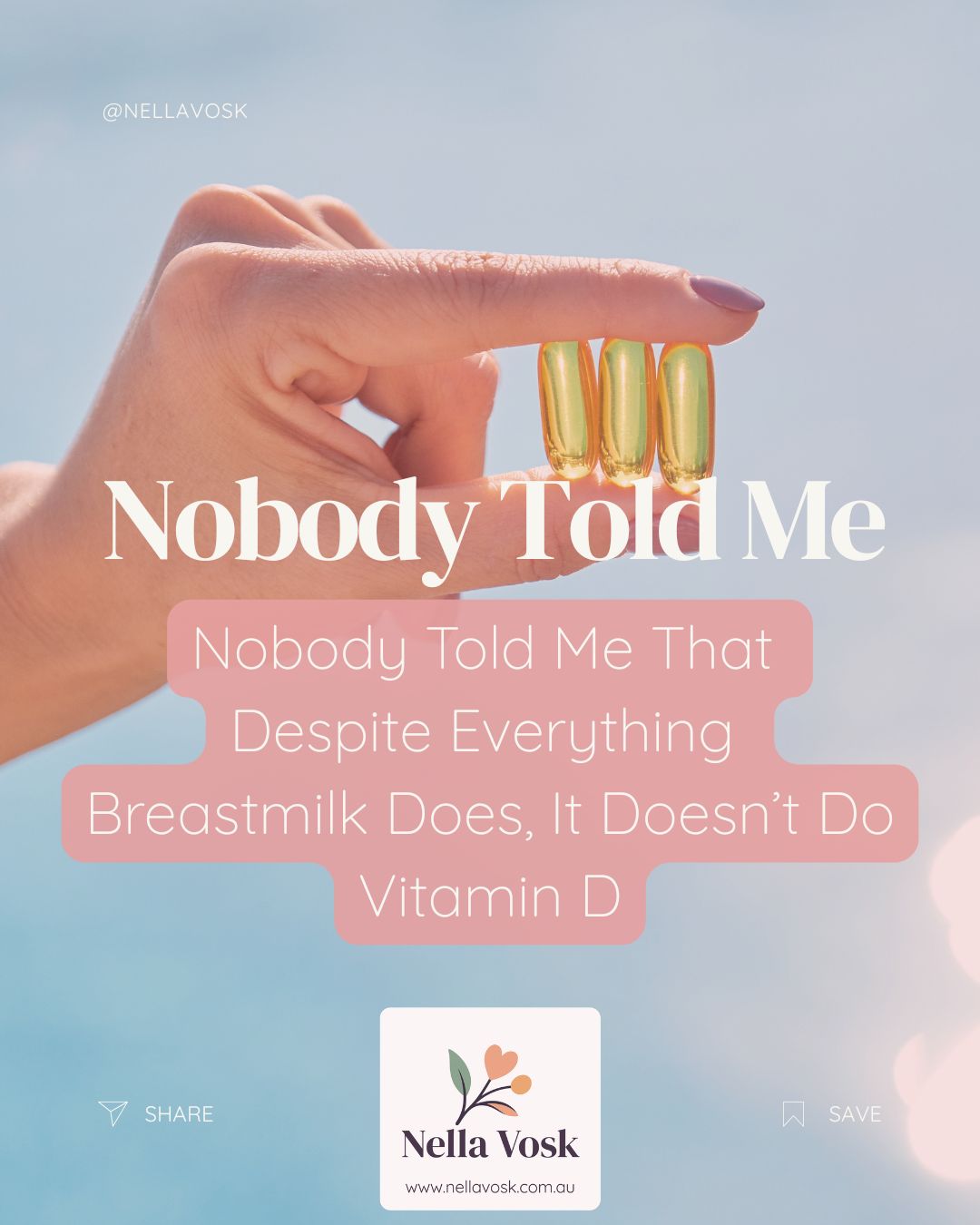
    Nobody Told Me That Despite Everything Breastmilk Does, It Doesn’t Do Vitamin D
    Nobody Told Me That Despite Everything Breastmilk Does, It Doesn’t Do Vitamin D

    Read More
    Nobody Told Me That How My Birth Went Could Show Up in My Milk
    Nobody Told Me That How My Birth Went Could Show Up in My Milk

    Read More
    Nobody Told Me That My Body Would Notice the Shift Back to Work Before I Even Got There
    Nobody Told Me That My Body Would Notice the Shift Back to Work Before I Even Got There

    Read More