
• Add description, images, menus and links to your mega menu

  • A column with no settings can be used as a spacer

  • Link to your collections, sales and even external links

  • Add up to five columns

  • da

  • A column with no settings can be used as a spacer

  • Link to your collections, sales and even external links

  • Add up to five columns

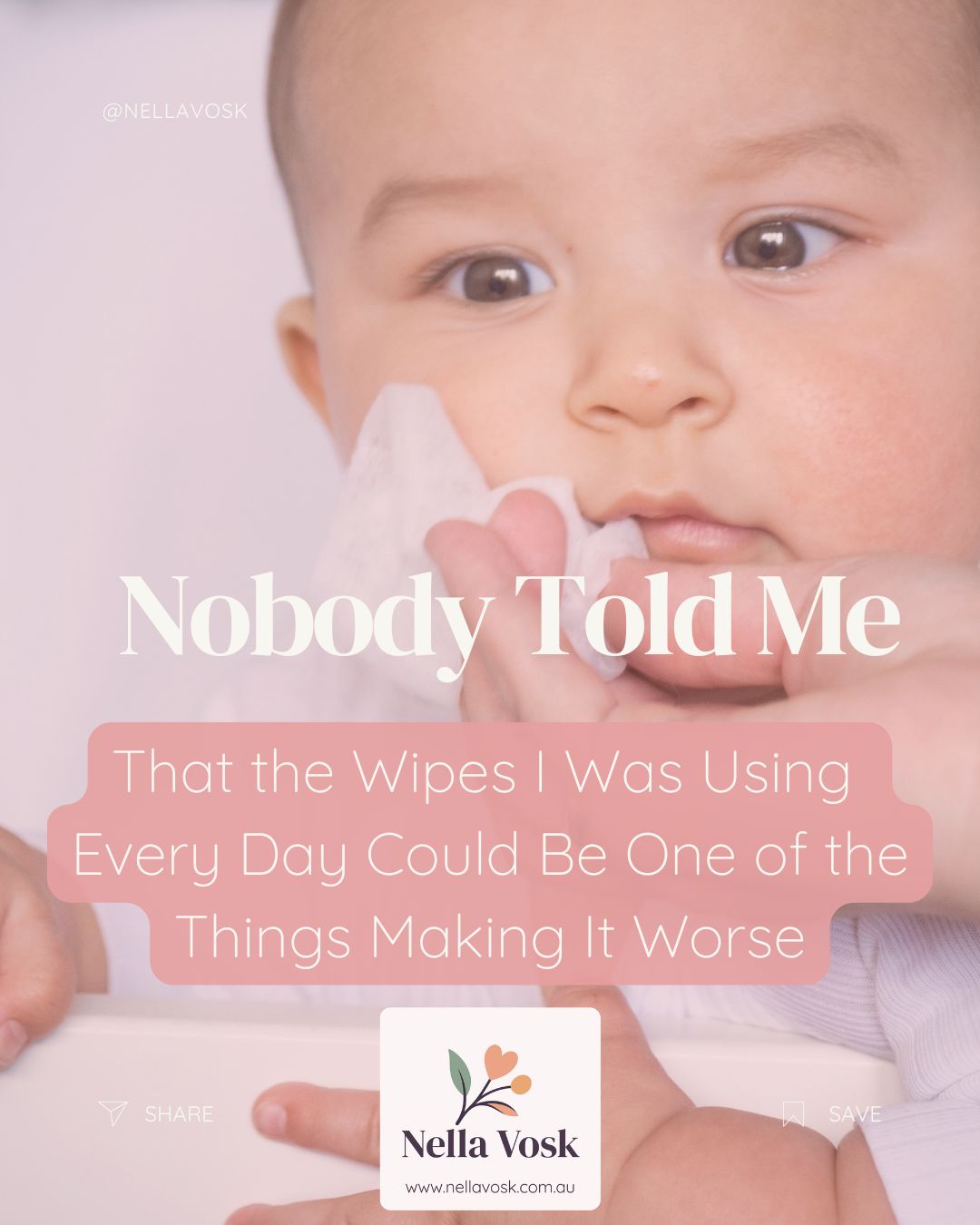
  • Nobody Told Me That the Wipes I Was Using Every Day Could Be One of the Things Making It Worse

    Founder of Nella Vosk • 14+ years supporting families across motherhood, feeding, and early childhood wellbeing

    Nobody Told Me That the Wipes I Was Using Every Day Could Be One of the Things Making It Worse

    This article is part of the Nella Vosk Complete Guide to Baby Eczema for Australian Families — everything you need to know about managing eczema-prone skin from the early months through toddlerhood.

    This article is part of Nella Vosk’s Nobody Told Me series — a growing collection of posts written for the parent who has been trying everything and still feels like they’re failing their child. Every post in this series starts from a moment a parent wasn’t given information they needed, and works back through what the evidence actually says. You can find the full series at nellavosk.com.au/pages/nobody-told-me.


    Nobody told me that the wipes I was using every day could be one of the things making it worse.

    By the time my daughter was three months old, I had changed the washing powder, the bath products, the moisturiser, and my diet. I was tracking flares, taking photographs, applying cream within three minutes of every bath. I was doing everything. The eczema was still unpredictable. The nappy area, in particular, was consistently inflamed in a way I couldn’t explain.

    It took a dermatologist visit, and a question I hadn’t thought to ask, to land on it. Which brand of wipes are you using? Not whether I was using wipes. Which ones. And then a follow-up question: have you read the ingredient list on the back?

    I hadn’t. Nobody had told me to.

    Baby wipes are used multiple times a day, every day, from birth. For a nappy change alone, most families use six to ten wipes per day. They are applied to the most sensitive skin on the body — the nappy area, the face, the hands — and they are not rinsed off. For a baby with eczema-prone skin, a wipe that contains sensitising ingredients is a multi-times-daily chemical exposure to a compromised skin barrier. It is, from a contact dermatitis perspective, one of the highest-risk product categories in a baby’s daily routine. And it is almost never discussed.

    This post names the specific ingredients in common baby wipes that are documented causes of contact dermatitis in eczema-prone skin, explains the mechanism, and points you toward what to look for instead.

    Can Baby Wipes Cause Eczema?

    Baby wipes do not cause atopic eczema. As established in the NTM post on why your baby’s eczema wasn’t your fault, atopic dermatitis has a genetic and immunological basis. A baby without the genetic predisposition will not develop eczema from exposure to baby wipes, regardless of their ingredient list.

    What baby wipes can do — and what the evidence clearly shows they do in a significant subset of eczema-affected babies — is trigger and sustain contact dermatitis in already-compromised skin. Contact dermatitis from wipe ingredients is a distinct process from atopic eczema: it is an inflammatory skin reaction caused by direct chemical irritation or allergic sensitisation to a specific ingredient. In a baby with atopic eczema, whose skin barrier is already impaired and whose immune system is primed toward inflammatory responses, the conditions for wipe-induced contact dermatitis are essentially always present.

    The clinical challenge is that wipe-induced contact dermatitis and atopic eczema flares look identical to the parent. The same red, inflamed, itchy skin. The same timing (worse after nappy changes). The same appearance as any other eczema flare. Without specifically investigating the wipes as a variable, contact dermatitis from wipe ingredients can persist for months while the parent continues using the problematic product, changing everything else.

    The Ingredients in Baby Wipes That Trigger Eczema-Prone Skin

    Not all baby wipes contain these ingredients, and not all babies with eczema react to the same ingredients. But these are the categories with the strongest evidence for causing contact dermatitis in sensitive and eczema-prone skin:

    Methylisothiazolinone (MI) and Methylchloroisothiazolinone (MCI)

    These are preservatives added to water-based products to prevent bacterial and fungal growth. They are effective preservatives and cheap to use, which is why they appear in a wide range of personal care and household products. They are also potent contact allergens.

    Research published in multiple dermatology journals — including a landmark 2014 study published in the journal Dermatitis, and a follow-up study specifically examining baby products published in 2014 by Schlichte and Katta at Baylor College of Medicine — identified methylisothiazolinone as an emergent allergen responsible for rising rates of allergic contact dermatitis, particularly in children. The Baylor study surveyed 152 baby and children’s skin care products sold at major retailers and found that wipes had the highest proportion of MI-containing products across all categories surveyed. Products labelled as “gentle,” “sensitive,” “organic,” or “hypoallergenic” were not excluded from containing MI.

    In response to rising rates of MI-related contact dermatitis, the European Scientific Committee on Consumer Safety recommended a ban on MI in leave-on cosmetics (products not rinsed off the skin) in 2013, and the European Commission subsequently banned MI in leave-on cosmetics. Baby wipes, which are applied to the skin and not rinsed, fall into the leave-on category despite their name. Australian regulation on MI in cosmetics is less restrictive than the EU framework, which means MI-containing wipes remain legally available in Australia.

    What to look for on the ingredient list: methylisothiazolinone, MI, methylchloroisothiazolinone, MCI, Kathon CG (a trade name for the MI/MCI combination). Any product containing any of these should be avoided in eczema-prone skin.

    Phenoxyethanol

    Phenoxyethanol is another common preservative used in baby wipes, often added as an alternative to or alongside parabens. It is generally considered safer than MI/MCI at typical concentrations, and it is widely used in products marketed as paraben-free and more natural alternatives.

    However, phenoxyethanol is a known skin irritant at concentrations above 1% in leave-on products, and a significant subset of people with eczema or sensitive skin experience reactions to phenoxyethanol-containing products. The French Agency for the Safety of Health Products (AFSSAPS) recommended in 2012 that phenoxyethanol not be used in cosmetics intended for children under three years of age because of concerns about systemic absorption, particularly when applied to compromised skin. In Australia, there is no equivalent restriction.

    What to look for: phenoxyethanol. Wipes marketed as “preservative-free” or “phenoxyethanol-free” do not contain it; plain water-based wipes or wipes preserved with alternative methods may also be free of phenoxyethanol.

    Fragrance and perfume

    Fragrance is the most common cause of contact dermatitis across all personal care product categories in all age groups. On ingredient lists, it may appear as “fragrance,” “perfume,” or as specific named fragrance ingredients (limonene, linalool, eugenol, and others). “Fragrance-free” means no fragrance compounds added; “unscented” may still contain masking fragrances used to cover the smell of other ingredients.

    For eczema-prone skin, fragrance in any product applied to the skin is a risk ingredient. This applies to wipes that smell pleasant, “fresh,” or subtly scented, as well as to products where the fragrance is not detectable to the parent. The fragrance-free label is the only reliable signal; even products described as “naturally fragranced” or containing essential oils may trigger reactions in sensitised skin.

    Propylene glycol and other glycols

    Propylene glycol is a humectant and solvent used in many baby wipes to maintain moisture and improve the skin feel of the product. It is also a known contact irritant and sensitiser in eczema-prone skin at the concentrations used in some wipe formulations. Butylene glycol, hexylene glycol, and other glycol variants carry similar risk profiles in sensitive skin.

    Sodium lauryl sulphate (SLS) and sodium laureth sulphate (SLES)

    SLS and SLES are surfactants that help the wipe lift and remove material from the skin. They are also the same compounds responsible for the skin barrier-disrupting effect of conventional soaps and shampoos in eczema-prone skin. In a leave-on product applied to compromised skin multiple times per day, SLS and SLES are significant irritants. Many wipe formulations have moved away from SLS specifically in response to its known irritant profile, but SLES and related surfactants remain present in some brands.

    Citric acid at high concentrations

    Citric acid is added to some wipes as a pH adjuster to maintain the wipe’s stability and to create a slightly acidic pH that discourages bacterial growth. At typical concentrations it is well-tolerated by most skin types. In some formulations, particularly those with higher citric acid concentrations, it can be irritating to compromised skin — particularly in the nappy area, which is already subject to the additional irritant effects of urine and stool.

    The Frequency Problem: Why Wipes Are Different to Other Products

    Even when individual baby products contain potentially irritating ingredients, most are used once a day or less. Bath products are used at bath time. Washing powder contacts skin via clothing, with one to two washes per week. Creams are applied twice daily at most. The exposure is bounded.

    Baby wipes are used six to twelve or more times per day. The nappy area alone may be wiped four to eight times across a typical day of nappy changes; add face wipes after feeds, hand wipes, and general clean-ups, and the total daily skin exposure to whatever is in the wipe is substantially higher than any other product in the baby’s routine.

    This frequency changes the risk calculation for any irritant or sensitiser in the formula. A preservative that is present at a concentration below the threshold for single-use irritation may still cause cumulative contact dermatitis when applied six to twelve times daily to compromised skin. The dose makes the poison applies here: low-concentration ingredients at high daily exposure frequencies can produce reactions that the same ingredient at the same concentration, used once daily, would not.

    How to Read a Baby Wipe Ingredient List

    Cosmetic ingredient lists in Australia follow INCI (International Nomenclature of Cosmetic Ingredients) naming conventions. Ingredients are listed in order of concentration, from highest to lowest, with the exception of ingredients present at less than 1%, which may be listed in any order at the end of the list. In practice, this means the first five to ten ingredients are the bulk of the formula; the last several ingredients (often including preservatives and fragrance) are present at low concentrations but are not necessarily lower-risk on a per-use basis for the reasons described above.

    Red flag scan for eczema-prone skin:

    • Any entry containing “iso” + “thiazolinone” — look for methylisothiazolinone, methylchloroisothiazolinone, benzisothiazolinone, or the trade name Kathon

    • Phenoxyethanol

    • Fragrance, parfum, or perfume — in any form, any concentration

    • Propylene glycol, butylene glycol, hexylene glycol

    • Sodium lauryl sulphate (SLS) or sodium laureth sulphate (SLES)

    • Any specific fragrance allergen — limonene, linalool, citronellol, eugenol, geraniol, benzyl alcohol (in its fragrance-compound form)

    A wipe that contains none of these is not guaranteed to be problem-free for every eczema-prone baby, but it eliminates the highest-risk categories. The simplest formula is the safest: water-based wipes with minimal additional ingredients carry the lowest risk.

    What to Use Instead: Safer Options for Eczema-Prone Skin

    Water-only wipes

    Wipes that contain only water and no other ingredients — or water with a minimal, eczema-tolerated preservative such as citric acid at low concentration and no fragrance — are the lowest-risk option. WaterWipes is the most well-known brand in this category in Australia and contains water and a minimal amount of grapefruit seed extract. No MI, no phenoxyethanol, no fragrance.

    Dry wipes with water

    Dry wipes — fabric squares with no solution at all — used with plain water are an alternative that removes the ingredient risk entirely. A squeeze bottle of warm water alongside a dry wipe provides effective nappy cleaning without any product contact. This approach is the most common recommendation from dermatologists and paediatric nurses for babies with active eczema in the nappy area.

    Reusable cloth wipes

    Reusable fabric wipes — cut from bamboo or organic cotton fabric, washed between uses — are the most ingredient-controlled option. The only variable is the washing detergent used to clean them, which should be fragrance-free and eczema-appropriate. The Nella Vosk guide to DIY baby wipes for eczema and sensitive skin covers the practical setup for cloth wipes, including DIY solution recipes and the brand options some families find helpful alongside them.

    Checking ingredients on so-called sensitive wipes

    Many wipes marketed as “sensitive,” “hypoallergenic,” or “for eczema” contain the same problematic preservatives as conventional wipes. As the Baylor College research found, these marketing terms do not reliably indicate a lower-risk ingredient profile. The only reliable approach is reading the INCI ingredient list against the red-flag categories above, regardless of what the front of the pack says.

    The Nappy Area: Why It’s Highest Risk

    The nappy area in babies with eczema is subject to a compounded irritant environment that makes wipe ingredient quality particularly important in this location:

    • Occlusion: the nappy creates a warm, moist, airless environment that increases skin permeability and enhances absorption of any chemical present on the skin surface. The same ingredient concentration that would be tolerated on an aerated body surface is more likely to penetrate and react in the occluded nappy area

    • Existing irritation: the nappy area in babies with atopic eczema is frequently already inflamed by atopic dermatitis in this region, by urine ammonia irritation, or by stool pH effects. Any additional irritant — including wipe ingredients — lands on already-compromised skin

    • Frequency: as discussed, the nappy area receives more wipe applications than any other body site. The compounded exposure is highest where occlusion is greatest

    If your baby’s eczema is concentrated in or around the nappy area and is not responding to emollient and topical treatment, changing wipes is one of the first practical interventions worth trialling before other more complex changes. Change one variable at a time and allow at least two weeks to assess the impact.

    Face and Hand Wipes: The Sites Most Often Overlooked

    Wipe-triggered contact dermatitis is not limited to the nappy area. Facial wipes used after feeds, hand wipes used after play, and multi-purpose wipes used for general clean-ups all apply the same ingredient risks to the face and hands — areas where eczema in infants is also common.

    Facial eczema in babies — the classic red patches on the cheeks and around the mouth — that does not resolve despite appropriate topical treatment may be perpetuated by frequent wipe application to the face after feeds. The cheeks and perioral area receive wipe contact after most feeds in the early months; if the wipe contains MI, phenoxyethanol, or fragrance, this is a multi-daily exposure to these ingredients in an area that is already a common eczema site.

    For babies with facial eczema, the simplest intervention is replacing all face wipes with a soft damp cloth (plain warm water, no product) and monitoring skin response over two weeks. This costs nothing and eliminates a potential high-frequency ingredient exposure from the face.

    Keep Reading

    DIY Baby Wipes for Eczema and Sensitive Skin: Safe Alternatives

    Baby Clothing Irritants: Hidden Triggers & Safe Choices

    Nobody Told Me That the Order I Applied the Skincare Mattered

    Nobody Told Me My Baby’s Eczema Wasn’t My Fault

    Infected Eczema in Babies: Signs, Symptoms & When to Act

    How to Wash Clothes for Eczema: Best Detergent Guide (Australia)

    Complete Guide to Eczema-Friendly Clothing for Australian Families


    Removing ingredient risk from the things that touch eczema-prone skin every day is the starting point. What your baby wears overnight is the other half of the equation — the longest uninterrupted skin contact of the day, without any product chemicals, in fabric designed to work with the skin rather than against it. The Bamboo Bubby range contains no dyes, no chemical treatments, no fragrance, and no synthetic materials — because for eczema-prone skin, what is not in the product matters as much as what is.


    ABOUT THE AUTHOR

    Kelly Northey is a Certified Postpartum Nutrition Professional (CPPNP) and founder of Nella Vosk, the parent company of the Bamboo Bubby range. She has spent fourteen years working with Australian families navigating baby and child eczema — the sleepless nights, the skin that won’t heal, and the guilt of feeling like you should be doing more. The Bamboo Bubby range exists because of those families. Learn more about Kelly.


    Also in Nobody Told Me: Your Baby's Skin

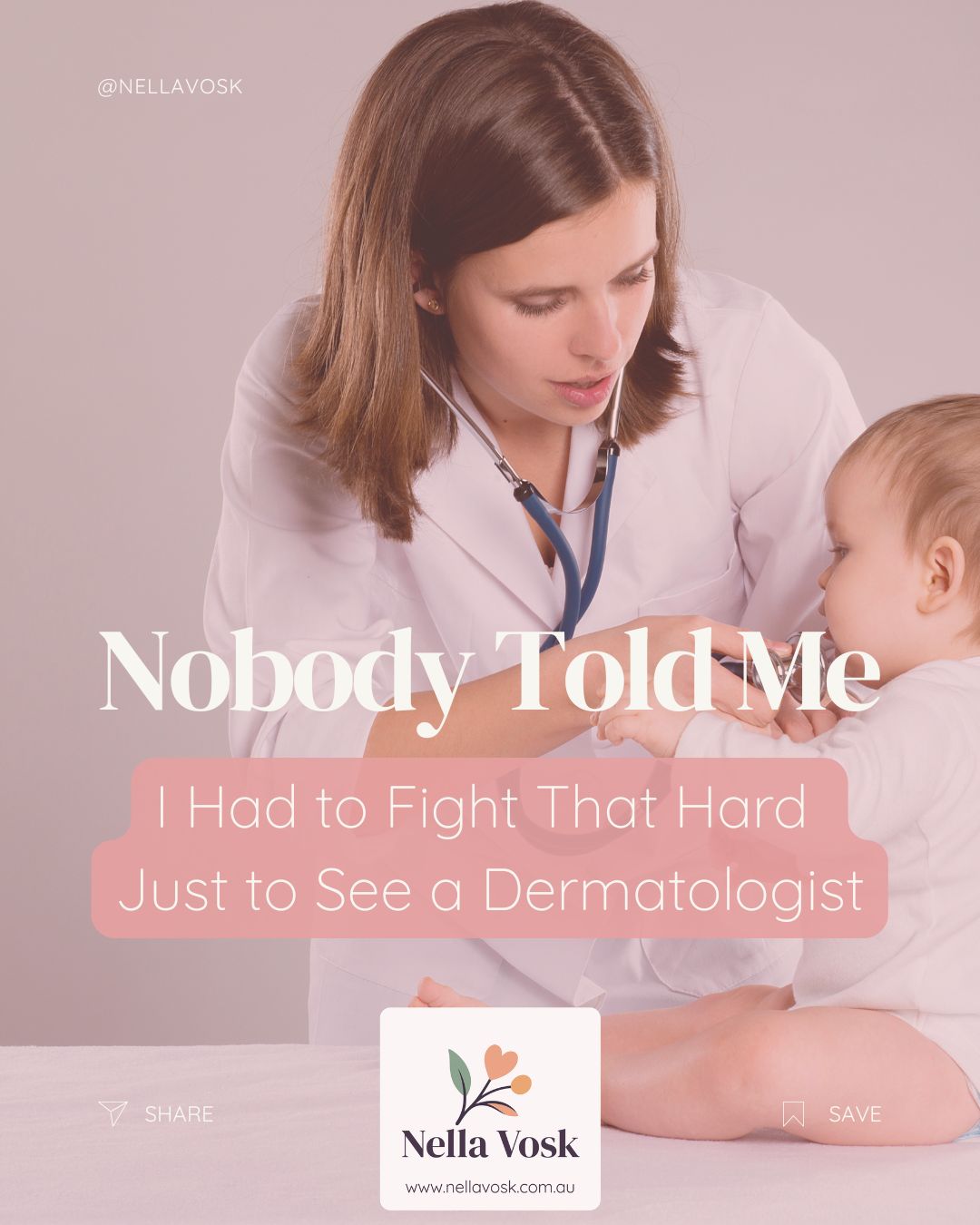
    Nobody Told Me I Had to Fight That Hard Just to See a Dermatologist
    Nobody Told Me I Had to Fight That Hard Just to See a Dermatologist

    Read More
    Nobody Told Me That the Antibiotics for the Infected Eczema Might Make the Next Infection More Likely
    Nobody Told Me That the Antibiotics for the Infected Eczema Might Make the Next Infection More Likely

    Read More
    Nobody Told Me That Adult Eczema Needs Different Management — or That My Baby’s Approach Wouldn’t Work for Mine
    Nobody Told Me That Adult Eczema Needs Different Management — or That My Baby’s Approach Wouldn’t Work for Mine

    Read More